Diagnosing and Resolving Hydraulic Water Hammer in Baltimore
Learn how to diagnose and resolve hydraulic water hammer in Baltimore homes, covering mechanical failure modes, trade secrets, and repair cost drivers.
Understanding Hydraulic Water Hammer and Pipe Banging
Hydraulic water hammer occurs when a rapidly moving column of water is suddenly forced to stop or change direction, creating a high-pressure shockwave that reverberates through the plumbing system and causes pipes to bang violently against framing. This destructive hydraulic shock is governed by fluid momentum and compressibility principles; when a fast-closing solenoid valve on a washing machine or a quick-shutoff ceramic disc faucet halts flow instantly, kinetic energy converts directly into sudden pressure spikes that can exceed normal static line pressure by several times. Establishing clear diagnostic boundaries is essential, as the issue can stem from localized fixture valve closures, a waterlogged air chamber, or a failing main pressure reducing valve (PRV) affecting the entire building supply.
In many residential systems, air chambers installed near fixtures lose their trapped air over time as water absorbs the gas under pressure. Once these cushions are depleted, metal-on-metal or metal-on-wood impacts occur every time a valve snaps shut. Ignoring this condition risks catastrophic fatigue failures in copper fittings, stress fractures in soldered joints, and premature leaks behind finished walls or inside confined service chases.
Overlooked Trade Secrets and Hidden Diagnostic Clues
Diagnosing hydraulic shock requires looking beyond the immediate noise location. Water is an exceptional acoustic conductor, meaning a loud bang near a second-floor bathroom may actually originate from a poorly secured washing machine supply line in the basement or an unanchored main supply run in a crawlspace. Lateral surface tension and structural framing can transmit vibrations across entire floor plates, misleading homeowners about the true stress point.
- Thermal Expansion vs. Hydraulic Shock: Do not confuse water hammer with thermal expansion ticking. Hammering is an instantaneous, heavy bang during valve closure, whereas ticking is a slow, rhythmic creaking caused by copper pipes expanding against joist holes as water heaters cycle.
- Waterlogged Air Chambers: Older homes often feature vertical pipe stubs designed to trap air. When these fill completely with water, the shock cushion vanishes. Simply draining the home's plumbing system can sometimes restore the air pocket temporarily.
- Faulty Pressure Reducing Valves (PRVs): Unusually high municipal static pressure (exceeding 80 PSI) dramatically magnifies hydraulic shockwaves. A failing PRV allows unchecked pressure surges into the structure, compounding the intensity of every valve closure.
- Strap and Clamp Failure: Loose or missing pipe straps allow copper and PEX lines to flex wildly within wall cavities. Securing accessible runs often mitigates the audible symptoms even if the underlying hydraulic spike persists.
- Washing Machine Quick-Close Valves: Modern solenoid valves snap shut in milliseconds, creating the most violent hydraulic surges in residential plumbing. Installing dedicated hammer arrestors directly at the laundry box is standard trade practice.
Safe Homeowner Triage vs. Dangerous DIY Boundaries
Homeowners can safely perform several non-invasive diagnostic checks to isolate the source of pipe banging before calling a professional. Begin by performing a systematic audit: flush toilets, turn off faucets one by one, and operate washing machine cycles while listening closely to determine if the noise is isolated to a single fixture or widespread. Locate the main indoor water shutoff valve and test your municipal water pressure using a simple screw-on pressure gauge attached to an exterior hose bibb. If readings exceed 80 PSI, or fluctuate wildly when fixtures open, the main pressure reducing valve requires professional attention.
Strict safety boundaries must be maintained. Never attempt to cut, modify, or unthread pressurized supply lines without first shutting off the main water supply and draining the system. Avoid over-tightening structural pipe straps to the point of crushing or scoring PEX and copper tubing, which creates structural stress risers. Furthermore, do not attempt to disassemble or adjust commercial-grade PRVs or municipal meter pit components without proper specialized extraction tools and authority.
Baltimore Architectural and Infrastructure Realities
Baltimore homes present unique challenges regarding plumbing acoustics and fluid dynamics. Classic historic brick rowhouses feature tight service chases, shared party walls, and rigid structural framing that readily transmit plumbing vibrations throughout the living space. In these compact footprints, a loud water hammer in the basement can echo clearly up to the third floor.
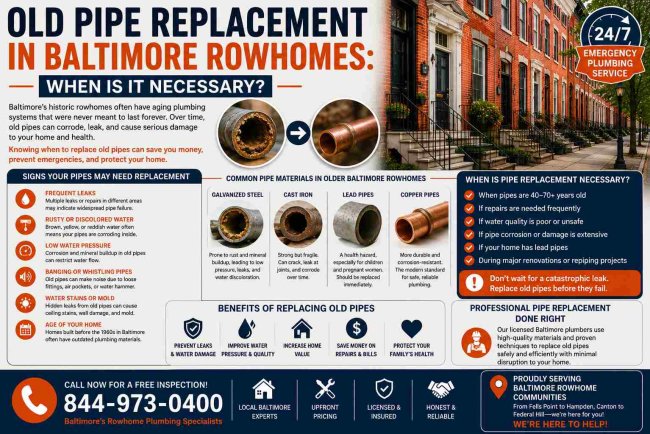
Furthermore, vintage rowhouses often feature mixed-metal plumbing configurations. A historical transition from old galvanized steel mains to modern copper or PEX branch lines creates structural rigidity changes where hydraulic shockwaves reflect abruptly. High mineral content in the regional water supply can also foul internal PRV diaphragms and clog mechanical components, accelerating component wear and rendering pressure regulation erratic.
Repair Options and Transparent Cost Drivers
Resolving water hammer ranges from simple DIY adjustments to complex plumbing retrofits, depending on the root cause and system layout. Below is a breakdown of common repair strategies and the primary factors influencing professional service costs.
| Repair Strategy | Primary Application | Key Cost Drivers |
|---|---|---|
| Installing Mini-Arrestors | Targeting high-velocity fixtures (washers, dishwashers) | Accessibility of supply lines, labor time, fixture count. |
| Replacing Main PRV | Mitigating high municipal pressure entering the home | Valve location, need for pipe modifications, shutoff condition. |
| Re-securing Pipe Runs | Eliminating loose pipe rattling in accessible areas | Crawlspace or basement clearance, wall/ceiling opening access. |
| Recharging/Clearing Air Chambers | Restoring vintage vertical air cushion stubs | System draining complexity, presence of hidden service loops. |
Frequently Asked Questions
1. What is the primary root cause of a loud banging noise in my plumbing system?
Water hammer is caused by the sudden halting of a moving water column, creating a shockwave that rattles pipes against building framing when valves close rapidly.
2. What are the early warning signs that hydraulic shock is damaging my plumbing?
Early indicators include a single sharp bang or series of rattles immediately after shutting off a faucet, washing machine, or toilet valve.
3. How can I safely check my home's water pressure without special tools?
You can attach an inexpensive, screw-on pressure gauge to an exterior hose bibb or a laundry sink threaded outlet while all other fixtures are turned off.
4. What common homeowner mistake worsens water hammer damage?
Ignoring the problem allows continuous high-pressure shockwaves to fatigue soldered joints, eventually causing pinhole leaks or fitting separations behind walls.
5. Which plumbing materials are most vulnerable to hydraulic shock failure?
Rigid older metallic lines, such as aging copper and galvanized steel, are particularly prone to joint cracking and hanger detachment under repeated hydraulic stress.
6. What primary factors influence the cost of professional water hammer repairs?
Cost drivers include the accessibility of plumbing runs, the necessity of replacing a failed pressure reducing valve, and the installation volume of mechanical water hammer arrestors.
7. When is a simple repair insufficient, requiring full system intervention?
If water hammer persists despite installing arrestors and adjusting PRV settings, widespread structural pipe stabilization or retrofitting may be required.
8. How do Baltimore's historic rowhouses complicate water hammer diagnostics?
Rigid party walls, tight service chases, and mixed-metal legacy piping amplify acoustic transmission, making it difficult to locate the exact source of the shockwave.
9. What preventative maintenance routine helps avoid plumbing shockwaves?
Periodically inspecting main pressure levels, checking washing machine supply hoses, and ensuring pipe straps remain secure in basements and crawlspaces prevents escalation.
10. When is professional plumbing intervention strictly necessary for water hammer?
Professional service is required when static water pressure exceeds 80 PSI, when PRVs fail, or when pipe banging occurs inside finished walls where access requires cutting drywall.
What's Your Reaction?