Diagnostician's Guide to Baltimore Plumbing Failures
Learn the mechanical causes, diagnostic steps, repair options, and cost drivers for this specific plumbing issue in Baltimore homes.
Direct Answer & Physical System Mechanics
Resolving plumbing distress begins with identifying the exact mechanical failure mode, whether it involves hydraulic pressure gradients, siphonage and vent vacuum locks, galvanic corrosion, scale thermal resistance, or sewer belly stagnation. When a plumbing system fails, the underlying cause is typically rooted in physical stress or material degradation within the specific fixture, branch line, or main soil stack. Understanding whether the issue is isolated to a single fixture or stems from a larger building drain failure dictates the entire intervention strategy. Without precise diagnosis, symptoms are merely treated while the root mechanical failure continues to compromise the integrity of the plumbing infrastructure.
Physical failure modes often manifest through unexpected pressure changes and drainage bottlenecks. For instance, hydraulic water hammer occurs when fast-closing valves send shockwaves through rigid pipes, while inadequate venting creates a negative vacuum that pulls water out of fixture traps. In older Baltimore properties, mixed-metal junctions accelerate galvanic corrosion, pitting pipes from the inside out until structural failure occurs. Differentiating between a local fixture blockage and a compromised main stack requires analyzing flow rates, pressure differentials, and system responses across multiple connection points throughout the house.
Overlooked Trade Secrets & Hidden Diagnostic Clues
Experienced diagnosticians look beyond the immediate symptom to uncover how water and waste travel through hidden structural spaces. Water often appears far from its actual break point due to lateral surface tension tracking along floor joists, subflooring, and plaster lath. Similarly, clearing a drain with a standard cable or snake only provides temporary relief if grease, mineral scale, or root intrusion is not thoroughly scoured or hydro-scoured from the pipe walls. Vent pipe blockages frequently mimic physical drain clogs by causing airlocks, slow drainage, and distinct gurgling sounds in nearby fixture traps, misleading untrained observers into snaking clear lines.
Another critical distinction lies between static water pressure and dynamic flow rate. A static pressure gauge reading might appear completely normal until a second valve opens, revealing a severe pressure drop caused by mineral-chOKed supply lines or undersized piping. Additionally, seasonal freeze-thaw cycles in Maryland place immense thermal and mechanical stress on uninsulated crawlspaces, exterior overhang bays, and foundation sillcocks, leading to hairline fractures that expand under peak operating pressure.
| Diagnostic Symptom | Probable Mechanical Failure | Recommended Investigation |
|---|---|---|
| Gurgling upon fixture drainage | Blocked vent stack creating vacuum lock | Inspect roof vent termination for obstructions |
| Normal static pressure, low flow under load | Scale or mineral restriction in supply pipe | Check dynamic pressure drop across distribution manifold |
| Dampness appearing away from plumbing fixtures | Surface tension tracking along joists | Trace moisture path upward to source leak |
Safe Homeowner Triage vs. Dangerous DIY Boundaries
Homeowners can safely perform several initial diagnostic steps before bringing in specialized tools. Locating the main indoor water shutoff valve and understanding how to operate it is essential for mitigating damage during a rupture. Conducting the silent toilet food-coloring test helps identify invisible tank leaks, while monitoring the low-flow indicator triangle on the municipal water meter can confirm whether hidden underground or in-wall leaks exist. Safely clearing accessible P-trap cleanouts can also resolve localized hair and soap scum accumulations without risking pipe damage.
However, strict boundaries must be observed to prevent severe property damage or personal injury. Never unthread main cleanout plugs under liquid head pressure, as trapped wastewater can violently erupt and flood living spaces. Avoid pouring caustic chemical drain openers into aging cast-iron or galvanized drains, as the exothermic reaction can crack fragile, corroded pipe walls. Furthermore, never attempt to modify gas supply flex lines or conduct repairs near electrical panels in flooded basements without ensuring power is completely disconnected at the main breaker.
Baltimore Architectural & Infrastructure Realities
Plumbing diagnostics in the Baltimore area require an intimate understanding of local housing stock, particularly classic Baltimore brick rowhouses. These historic properties often feature shared party-wall plumbing chases where supply and drain lines are tightly packed and difficult to access without disturbing historic finishes. The metropolitan area's infrastructure bridges multiple eras of construction, creating mixed-metal transition challenges involving legacy lead service in-lines, galvanized steel supply pipes, vintage drum traps, bell-and-spigot cast iron, and modern PVC or PEX repairs.
Furthermore, many sub-grade daylight basemons in Baltimore are highly susceptible to municipal storm line surcharges, making functional backwater valves a vital defense against urban flooding. High mineral content in the regional water supply also causes accelerated sediment baking at the base of gas and electric water heaters, reducing thermal efficiency and predisposing tanks to premature bottom-plate failure.
Repair Options & Transparent Cost Drivers
When addressing structural plumbing failures, repair options typically range from temporary mechanical clamps and pipe sleeves to targeted spot section replacements and comprehensive repiping or trenchless pipe lining (CIPP). Temporary patches buy time but do not address systemic wall thinning, whereas full section replacement or modern trenchless lining provides long-term structural integrity. Choosing the right intervention depends heavily on the pipe material, extent of corrosion, and accessibility within the building's layout.
Total project costs are driven by several transparent logistical and technical factors rather than arbitrary pricing. Key cost drivers include diagnostic camera equipment setup time, access complexity (such as working within cramped crawlspaces versus cutting through historic plaster, tile, or concrete basement slabs), municipal permit requirements, and the necessity of emergency after-hours dispatch for critical system failures.
Frequently Asked Questions
1. What is the primary root cause behind this specific plumbing failure?
The root cause is typically a combination of material fatigue, environmental stress, and age-related degradation within the pipe wall or fitting joints.
2. What early warning symptoms should homeowners look for?
Watch for slow drainage, unexplained moisture stains on adjacent walls or ceilings, musty odors, fluctuating water pressure, and unusual gurgling sounds.
3. What safe, non-invasive checks can I perform myself?
Check the water meter low-eteenth indicator for movement, inspect visible fixture connections, and verify that cleanout caps are secure without active weeping.
4. What common mistakes tend to worsen the damage?
Using harsh chemical drain cleaners on fragile pipes, over-tightening threaded fittings, and ignoring minor dampness until structural rot sets in.
5. How do I identify material failure indicators in older piping?
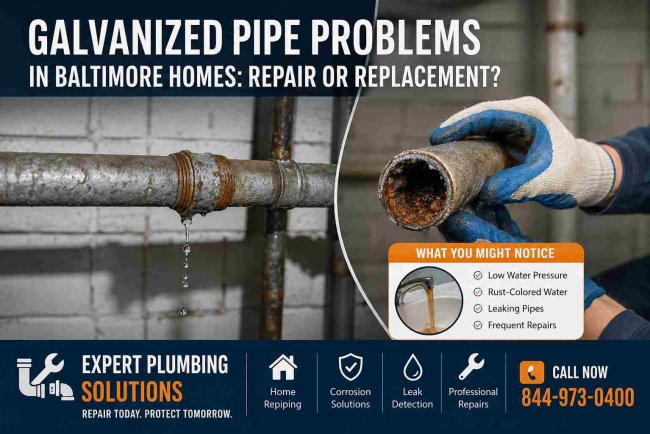
Look for flaking rust on steel pipes, white mineral crusts around joints, discolored water, and visible bulging or pinhole weeping.
6. What primary factors influence repair and labor costs?
Access difficulty, depth of burial or concealment behind finished walls, material costs, and the extent of required structural restoration.
7. When should I choose repair over full replacement?
Repairs are suitable for isolated localized damage on otherwise sound pipe; full replacement is necessary when widespread corrosion or structural collapse is detected.
8. How do Baltimore's historic rowhouses complicate this issue?
Shared party walls, cramped service chases, and aging bell-and-spigot cast-iron stacks make non-destructive access and replacement significantly more challenging.
9. What preventative maintenance routines reduce recurrence risks?
Schedule annual professional camera inspections, flush water heaters biannually to remove sediment, and avoid pouring grease or fibrous waste down drains.
10. When is emergency professional intervention strictly required?
Immediate professional help is mandatory when main water supplies cannot be shut off, sewage backs up into living spaces, or structural flooding threatens electrical systems.
What's Your Reaction?