Basement Plumbing Problems in Baltimore Rowhomes
Learn why Baltimore rowhome basements develop plumbing problems, warning signs, repair options, costs, timelines, and when to call an emergency plumber.
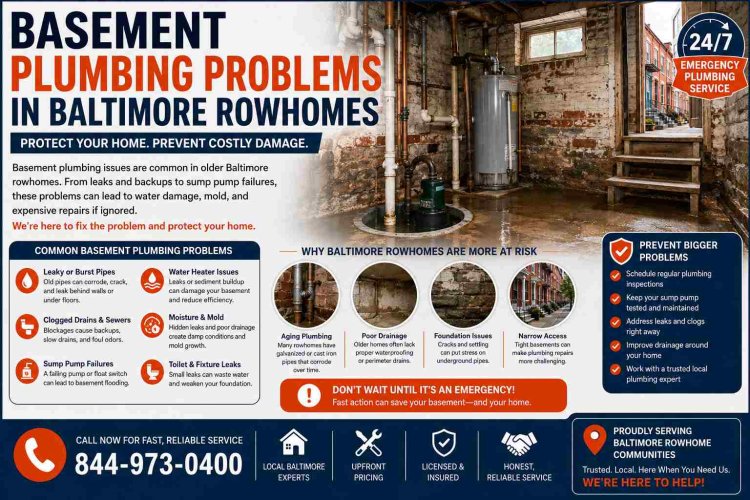
Basement plumbing problems in Baltimore rowhomes can become serious quickly. A slow basement drain may seem like a minor inconvenience, but it can be the first warning of a blocked sewer line, damaged drainpipe, failing sump system, or water entering through an exterior connection.
Baltimore rowhomes present some unique plumbing challenges. Many properties are older, closely connected, and built with plumbing systems that have been repaired or modified over many decades. In a rowhome, the basement is also often where the main drain, sewer connection, water heater, laundry plumbing, and other critical systems come together.
Baltimore City has specifically studied basement sewer backups and distinguishes between private sewer laterals serving a property and the public sewer system. The portion of a sewer lateral on private property may be the homeowner's responsibility, while public infrastructure is generally maintained by the city.
If wastewater is backing up into your basement, multiple drains are slowing down at once, or you notice recurring moisture around plumbing fixtures, it is important to determine the actual cause instead of repeatedly treating the symptom.
For professional plumbing assistance, homeowners can contact Plumber in Baltimore at 844-973-0400.
Why Are Basement Plumbing Problems Common in Baltimore Rowhomes?
Baltimore's traditional rowhouse neighborhoods contain many closely spaced homes built in continuous blocks. The city's zoning code recognizes the rowhouse as a predominant housing type in many traditional urban neighborhoods.
Age is one of the biggest factors.
Older plumbing systems may contain cast-iron drains, older clay sewer connections, galvanized water piping, or sections that have been replaced at different times. These materials can deteriorate, corrode, crack, develop buildup, or become restricted.
The configuration of a rowhome can also make problems more noticeable. A basement may contain the lowest plumbing fixtures in the house. When a drain or sewer line becomes obstructed downstream, wastewater can seek the lowest available opening.
That is why a basement floor drain, utility sink, shower, or toilet may overflow even though the original blockage is somewhere farther down the line.
Heavy rain can create another challenge. Baltimore's sewer infrastructure has experienced wet-weather backup issues, and city studies have examined the relationship between basement backups and both private and public sewer systems.
What Are the Most Common Basement Plumbing Problems?
Several problems appear repeatedly in older Baltimore rowhomes.
Sewer or Main Drain Backups
A sewer backup is one of the most serious basement plumbing problems. Wastewater may come through a floor drain, basement toilet, shower, or other low fixture.
Common warning signs include:
- Several drains becoming slow at the same time
- Gurgling toilets
- Wastewater rising from a basement drain
- Sewage odors
- Water backing up when an upstairs toilet is flushed
- Repeated drain clogs after temporary clearing
If multiple fixtures are affected, the problem may be in the main building drain or sewer connection rather than a single sink or shower.
Basement Floor Drain Clogs
Floor drains are designed to remove water from low areas, but they can become clogged with sediment, dirt, debris, soap residue, or other material.
A floor drain that drains slowly should not automatically be ignored. If it is connected to a larger drainage system, a developing obstruction may eventually cause water to rise instead of drain.
Aging or Damaged Sewer Lines
Older sewer piping can deteriorate over time. Tree roots can enter cracked joints, soil can shift around buried piping, and sections of older pipe may collapse or become severely restricted.
A recurring blockage is particularly important. If a drain is cleared and quickly becomes clogged again, the goal should be finding out why rather than repeatedly removing the blockage.
Leaking Basement Supply Pipes
Not every basement water problem comes from a sewer.
A leaking water-supply pipe can release clean water under pressure. Warning signs may include:
- A sudden increase in water usage
- Constant dripping
- Wet spots near exposed piping
- Water around the water heater
- Corrosion around pipe joints
- Damp insulation or walls
A supply-line leak should be handled promptly because even a relatively small leak can damage flooring, walls, stored belongings, and electrical components.
Water Heater Plumbing Problems
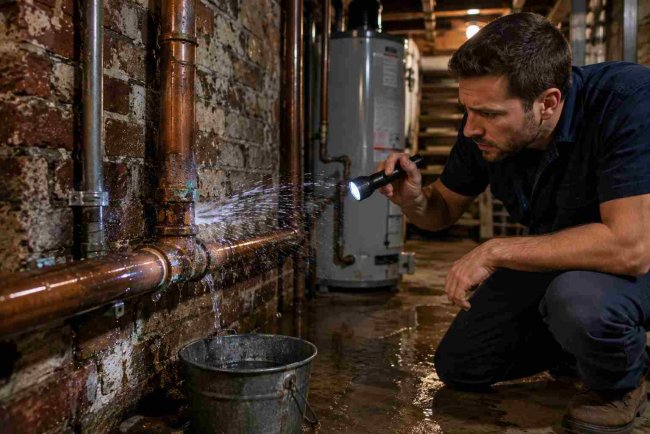
Basements frequently contain the water heater. Leaking connections, corroded valves, failed fittings, or a deteriorating tank can cause substantial water damage.
If water is collecting around the water heater, identify whether the leak is coming from a connection, valve, drain, relief component, or the tank itself. Do not assume tightening a fitting will solve the problem.
Sump Pump Problems
Some Baltimore basements rely on sump pumps to move groundwater away from the property. A failed pump can allow water to accumulate during periods of heavy rain.
A sump pump that runs continuously, makes unusual noises, does not activate, or cannot keep up with incoming water deserves professional attention.
What Warning Signs Should Baltimore Homeowners Watch For?
The earliest warning signs are often easy to overlook.
Pay attention if your basement drain takes longer to empty, your toilet gurgles when another fixture is used, or you repeatedly smell sewage near a drain.
Other warning signs include:
- Water appearing around a floor drain
- Repeated toilet clogs
- Several slow drains
- Sewage odors
- Bubbling or gurgling sounds
- Wet basement walls near plumbing
- Unexplained water stains
- A sump pump that cycles excessively
- Plumbing problems that occur after heavy rain
- A clog that returns shortly after being cleared
One isolated slow sink drain may simply be a fixture-level clog. Multiple affected fixtures are more concerning because they can indicate a shared drainage problem.
What Causes Basement Sewer Backups?
A basement sewer backup can have more than one cause.
A common cause is a blockage in the private sewer lateral between the home and the public sewer connection. Baltimore's own feasibility study explains that private sewer laterals and public sewer mains are separate parts of the overall system, with responsibility depending on where the problem occurs.
Other possible causes include:
- Grease and debris accumulation
- Tree-root intrusion
- Cracked or collapsed piping
- Pipe deterioration
- Improper repairs
- Foreign objects
- Heavy rainfall
- Public sewer restrictions
- Structural defects in the sewer lateral
The important point is that the source should be diagnosed before major repairs are recommended.
What Can You Do Temporarily Before the Plumber Arrives?
If sewage is backing up into the basement, stop using water whenever possible.
Avoid flushing toilets, running washing machines, taking showers, or running large amounts of water through sinks. Additional water may have nowhere to go and could increase the backup.
If the water is clearly sewage, avoid direct contact. Keep children and pets away from the affected area.
Do not repeatedly pour chemical drain cleaners into a severely blocked main drain. Chemical products may not solve a structural sewer problem and can create additional hazards for anyone working on the plumbing afterward.
If you have a cleanout that is accessible and you are not trained to work on plumbing systems, it is generally better to let a professional evaluate it rather than opening a pressurized or backed-up line yourself.
For a clean-water leak from an accessible supply pipe, shutting off the appropriate water supply may limit damage while you wait for professional help.
How Does a Professional Diagnose Basement Plumbing Problems?
A professional plumber should begin with diagnosis rather than immediately recommending replacement.
The first step is usually to determine which fixtures are affected and whether the problem is isolated or connected to the main drainage system.
The plumber may then inspect accessible drains, cleanouts, valves, exposed piping, and other components.
For recurring sewer problems, a plumbing camera inspection can be especially useful. A camera can help identify conditions inside the pipe that a standard drain-clearing tool cannot fully explain, such as roots, cracks, severe buildup, offsets, or collapse.
The repair recommendation should match the actual condition of the plumbing.
A straightforward obstruction may only require professional drain cleaning. A damaged sewer line may require spot repair, lining, or replacement depending on the pipe's condition, location, accessibility, and local requirements.
How Long Does Basement Plumbing Repair Take?
The timeline depends heavily on the problem.
A straightforward drain clog may be resolved during one service visit. A more complicated sewer blockage may take longer if the plumber needs to locate a cleanout, perform a camera inspection, or determine whether the issue is on the private or public side.
A pipe repair can take several hours or longer depending on access.
Major sewer replacement may take a day or more and can involve excavation, permits, inspections, or restoration work.
Homeowners should ask the plumber:
- What is causing the problem?
- Where is the blockage or damaged section?
- Is the problem inside the home or outside?
- Is the sewer lateral involved?
- Does the line need camera inspection?
- What work is necessary now?
- What can safely wait?
- What is included in the estimate?
How Much Does Basement Plumbing Repair Cost in Baltimore?
There is no reliable single price for basement plumbing repair because the scope can range from clearing a simple obstruction to replacing an underground sewer line.
As a general planning guide, homeowners may encounter:
- Basic drain clearing: roughly $150–$400
- More involved main-line clearing: roughly $300–$800+
- Camera inspection: roughly $150–$500
- Localized pipe repair: often hundreds to several thousand dollars
- Major sewer-line replacement: potentially several thousand dollars or more
These are broad industry planning ranges, not a quote from Plumber in Baltimore. Actual pricing can vary based on access, severity, materials, labor, equipment, permits, excavation, emergency timing, and the condition of the existing plumbing.
A reputable plumber should explain what is included before major work begins.
What Happens If You Ignore a Basement Plumbing Problem?
Ignoring a small plumbing problem can turn an inexpensive repair into a larger one.
A recurring drain clog may indicate a deteriorating sewer line. A small leak can damage flooring or framing. A sewage backup can contaminate the basement and create difficult cleanup conditions.
Sewage should always be treated seriously because contaminated water can contain harmful microorganisms.
There is also a property-damage concern. Moisture that remains inside walls, floors, or porous materials can contribute to deterioration and unpleasant odors.
The longer a plumbing problem continues, the more difficult it may become to separate the original plumbing repair from the resulting water damage.
When Is a Basement Plumbing Problem an Emergency?
Call for emergency plumbing assistance when the problem threatens health, property, or essential water service.
Examples include:
- Sewage actively entering the basement
- A major water-supply leak
- A burst pipe
- Water rapidly approaching electrical equipment
- A failed sump pump during active basement flooding
- Multiple fixtures backing up with wastewater
- A sewer backup that continues despite stopping water use
- Water that cannot be controlled with an accessible shutoff
If electrical equipment or outlets are submerged, do not enter standing water simply to reach electrical components. Safety comes first.
How Can You Prevent Basement Plumbing Problems?
Prevention starts with paying attention to changes.
Do not wait until a basement drain completely backs up before investigating repeated slow drainage.
Good maintenance habits include:
- Avoid pouring grease into drains
- Keep foreign objects out of toilets
- Address recurring clogs instead of repeatedly treating them
- Inspect exposed basement pipes periodically
- Test the sump pump before major storms
- Keep accessible drains and cleanouts unobstructed
- Watch for sewage odors
- Monitor unusual changes in water usage
- Consider a sewer camera inspection when repeated backups occur
- Ask a plumber about the condition of older sewer piping
Baltimore's plumbing code also contains requirements concerning protection of plumbing systems from freezing and overheating, which is particularly relevant to piping located in areas exposed to outdoor temperatures.
People Also Ask About Baltimore Rowhome Basement Plumbing
Why does my Baltimore rowhome basement keep flooding?
The cause could be a sewer backup, clogged drain, leaking supply pipe, failed sump pump, groundwater intrusion, or another drainage problem. The source needs to be identified before choosing a repair.
Why does sewage come up through my basement floor drain?
A blocked downstream drain or sewer line can force wastewater toward the lowest available fixture. If several fixtures are affected, the problem may be farther downstream than the floor drain itself.
Is a sewer backup always the city's responsibility?
No. Responsibility can depend on where the problem is located. Baltimore's sewer documentation distinguishes between private portions of sewer laterals and public sewer infrastructure.
How do I know if my sewer line is damaged?
Recurring backups, repeated clogs, sewage odors, slow drainage throughout the home, and problems that return after cleaning can justify a professional sewer camera inspection.
Can heavy rain cause a Baltimore basement sewer backup?
Yes, wet-weather conditions can contribute to sewer backup problems. However, a plumber should determine whether the cause is related to the public system, private sewer lateral, drainage conditions, or a combination of factors.
Should I use drain cleaner for a basement clog?
Chemical drain cleaners are generally not the right solution for a suspected main-line or sewer problem. Repeated backups require diagnosis rather than simply adding chemicals.
Voice Search Questions Homeowners Ask
“Who should I call for a sewage backup in my Baltimore basement?”
Contact a qualified local plumber as soon as possible, particularly if wastewater is actively entering the home.
“How do I stop my Baltimore basement drain from backing up?”
Stop using water in the home and have the drainage system professionally inspected to identify the obstruction or damaged section.
“How much does it cost to fix a sewer line in Baltimore?”
The price depends on the location and condition of the line, access, repair method, labor, permits, and whether excavation is required.
“Why does my basement drain back up when it rains?”
Rain can place additional stress on drainage and sewer systems. A professional can determine whether the issue is related to the property's plumbing, private sewer lateral, exterior drainage, or public infrastructure.
How to Choose the Right Plumber for a Baltimore Rowhome
The cheapest first number is not always the best choice for a recurring plumbing problem.
Look for a plumber who can explain the diagnosis clearly and distinguish between a temporary clog and an underlying plumbing defect.
Before authorizing significant work, ask for:
- A clear explanation of the problem
- The recommended repair
- An itemized estimate when appropriate
- Information about warranties
- Expected repair time
- Whether permits are required
- Whether a camera inspection is recommended
- Confirmation of what is included in the price
For older Baltimore rowhomes, experience with sewer lines, basement plumbing, drainage issues, and older plumbing systems can be particularly valuable.
Get Professional Help for Basement Plumbing Problems in Baltimore
Basement plumbing problems in Baltimore rowhomes should not be treated as routine inconveniences when they keep returning. A slow drain, sewage odor, recurring backup, leaking pipe, or failing sump system may be an early warning that a larger plumbing problem is developing.
The most effective approach is to identify the cause, understand the repair options, and address the issue before it causes unnecessary property damage.
If you need professional plumbing assistance in Baltimore, contact Plumber in Baltimore at 844-973-0400 or visit plumberinbaltimore.com to learn more about available plumbing services.
A proper diagnosis can help you avoid unnecessary repairs, understand what you are paying for, and protect your Baltimore rowhome from a much more expensive plumbing emergency.
What's Your Reaction?