Plumbing Problems in Baltimore Rowhomes What Homeowners Should Know
Baltimore rowhome plumber, plumbing problems in Baltimore, Baltimore plumbing repair, rowhome sewer problems, Baltimore sewer line repair, old home plumbing Baltimore, emergency plumber Baltimore
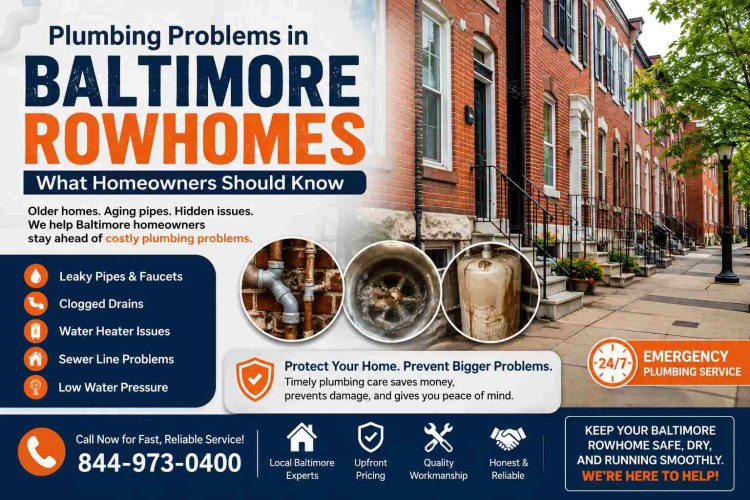
Baltimore rowhomes have plenty of character, but their plumbing systems can present challenges that homeowners in newer detached houses may never encounter. Many rowhomes have older pipes, compact basements, plumbing routed through narrow walls, and drainage systems that have been repaired or modified several times over the years.
That means a small plumbing symptom—such as low water pressure, a slow drain, a damp basement wall, or a recurring toilet backup—can sometimes point to a larger problem.
For Baltimore homeowners, understanding why these problems happen can help prevent expensive water damage and make it easier to know when a professional plumber is needed. The city's housing stock includes many older properties, and Baltimore's building regulations specifically address protection of plumbing systems from freezing and other environmental conditions.
Whether you own a rowhome in Canton, Federal Hill, Hampden, Fells Point, Charles Village, or another Baltimore neighborhood, this guide explains the plumbing problems you should watch for, what you can safely do yourself, and when professional plumbing service makes sense.
Why Baltimore Rowhomes Have Unique Plumbing Problems
A Baltimore rowhome is built differently from a modern suburban house. Homes are narrow, adjoining structures share walls, and plumbing may run vertically through multiple floors.
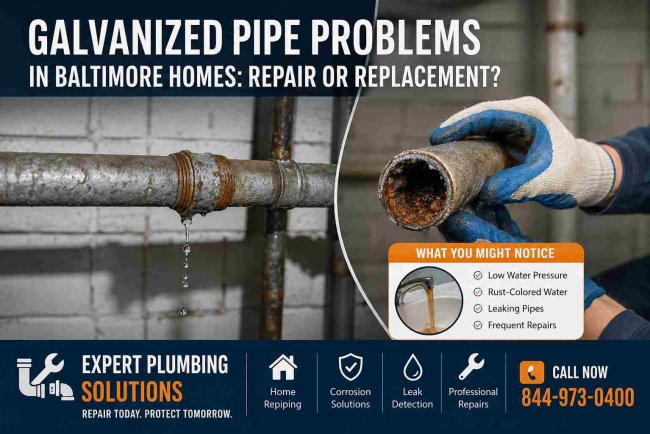
Older rowhomes may also contain galvanized steel water pipes or cast-iron drain piping. Galvanized steel can gradually corrode internally, restricting water flow, while older cast-iron drainage systems can develop corrosion, cracks, scaling, or weakened joints.
Another issue is accessibility. A pipe hidden behind plaster, brick, flooring, or a finished wall cannot always be reached without opening part of the structure.
This is why a plumbing problem that looks simple from the outside can require careful diagnosis before a repair is started.
Common Plumbing Problems in Baltimore Rowhomes
Low Water Pressure
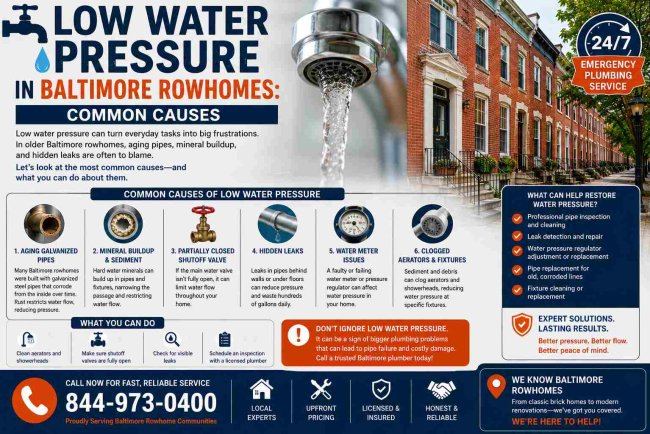
Low water pressure is common in older plumbing systems, particularly when aging galvanized pipes have accumulated internal corrosion.
The warning signs include:
- Weak shower pressure
- Slow-filling toilets
- Faucets that produce less water than they once did
- Pressure that becomes worse when multiple fixtures run
- Rust-colored water after the faucet has been unused
The problem may be limited to one fixture, or it may affect the entire home.
A clogged faucet aerator is an inexpensive possibility. However, if several fixtures have poor pressure, the cause may be farther upstream.
A plumber can check the pressure, inspect accessible piping, and determine whether the restriction is caused by a valve, supply line, fixture, or deteriorating pipe.
Leaking or Corroded Pipes
Older pipes can eventually develop pinhole leaks, weak joints, or visible corrosion.
In a rowhome, a small leak can be especially troublesome because water may travel inside a wall or ceiling before appearing somewhere else.
Look for:
- Brown or yellow stains
- Peeling paint
- Damp drywall
- Musty smells
- Water around basement pipes
- Unexpected increases in water usage
- Dripping sounds when fixtures are turned off
Do not assume the location of the stain is the location of the leak. Water can travel along framing and other surfaces before becoming visible.
If a pressurized water line is leaking, shutting off the appropriate water supply can limit damage until a plumber arrives.
Slow Drains and Recurring Clogs
A bathroom sink that drains slowly once may simply have hair or debris near the drain opening.
A recurring problem is different.
If multiple fixtures begin draining slowly, the issue could be farther down the drainage system.
Common warning signs include:
- Several slow drains
- Gurgling toilets
- Water backing up into a tub or shower
- Sewer odors
- A toilet that repeatedly clogs
- Drains that improve temporarily after plunging but become slow again
Avoid repeatedly using chemical drain cleaners as a substitute for diagnosis. They may not solve a deeper blockage and can create hazards for anyone working on the plumbing afterward.
A professional may use a drain machine, inspection equipment, or a sewer camera depending on the symptoms.
Sewer Line Problems
Sewer problems deserve special attention in Baltimore rowhomes.
A sewer line can become restricted by buildup, damaged pipe sections, root intrusion, displaced joints, or other obstructions. Baltimore's sewer regulations recognize the importance of keeping house drains and sewer connections in proper working order.
One of the biggest warning signs is a backup affecting more than one fixture.
For example, if flushing the upstairs toilet causes water to rise in a basement drain, the problem may not be the toilet itself. It can indicate a blockage farther downstream.
A sewer camera inspection can help determine whether the problem is a blockage, damaged pipe, root intrusion, or another structural issue.
Basement Plumbing and Water Problems
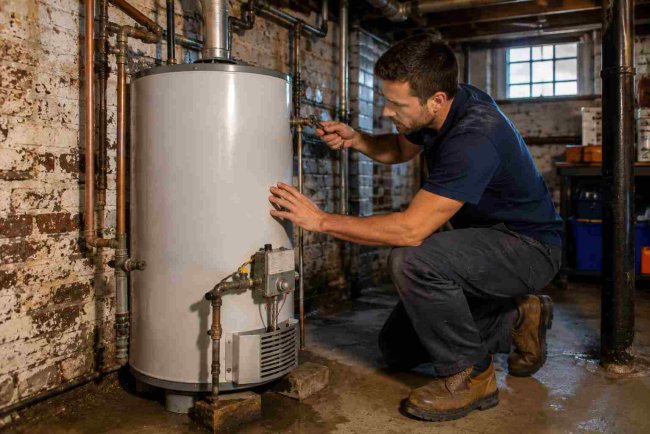
Many Baltimore rowhomes have compact basement areas where plumbing lines, drains, water heaters, and other systems are located close together.
A wet basement should never automatically be blamed on a plumbing pipe.
Possible causes include:
- A leaking supply pipe
- A failed drain connection
- Sewer backup
- Foundation water intrusion
- Poor exterior drainage
- A water heater leak
- A sump or drainage problem
Finding the actual source matters because repairing the wrong problem wastes money and may allow the damage to continue.
If water is actively entering the basement, first determine whether it is safe to enter the area. If electrical equipment or outlets may have been exposed to water, avoid contact and have the situation evaluated safely.
Frozen and Burst Pipes
Baltimore winters can create freezing risks for plumbing installed in vulnerable locations.
Baltimore's plumbing code requires plumbing systems to be protected from freezing, including piping located in exterior walls and other areas exposed to outdoor temperatures.
Warning signs include:
- Little or no water from a faucet
- Frost on an exposed pipe
- Bulging or cracked pipe sections
- Sudden water flow after a frozen period
- Water appearing from walls or ceilings during a cold spell
If a pipe has frozen, opening the faucet can relieve pressure while the situation is addressed. Never use an open flame to thaw a pipe.
If the pipe has burst, shut off the home's main water supply if you can do so safely and contact a plumber immediately.
What Homeowners Can Try Before Calling a Plumber
Not every plumbing issue requires an emergency service call.
For a minor drain clog, a plunger may be worth trying first. Clean faucet aerators can sometimes restore water flow when the problem is limited to one fixture.
For a leaking fixture supply connection, shutting off the local valve can prevent additional water loss.
However, DIY troubleshooting should stop when:
- Water is leaking behind a wall
- A sewer backup is occurring
- A main water line is leaking
- Multiple fixtures are backing up
- A pipe has burst
- You cannot locate the shutoff valve
- The repair requires cutting walls or flooring
- You suspect contaminated water
The goal is to control the immediate problem without creating a larger one.
How a Professional Baltimore Plumber Diagnoses a Rowhome Problem
A good plumbing repair should begin with diagnosis rather than immediately replacing parts.
The plumber may:
- Ask when the problem started.
- Determine which fixtures are affected.
- Check accessible pipes and valves.
- Test water pressure when appropriate.
- Inspect drains and cleanouts.
- Use a camera for suspected sewer-line problems.
- Identify the damaged or restricted section.
- Explain repair options.
- Provide an estimate before major work begins.
Rowhomes can require additional care because pipes may pass through finished areas, shared walls, basements, or narrow access points.
A professional should explain what needs to be opened, replaced, repaired, or restored before work begins.
How Long Does Rowhome Plumbing Repair Take?
The timeline depends heavily on the problem.
A simple fixture repair may take less than an hour. A drain blockage can sometimes be cleared during the same visit.
More complicated work may take longer.
Typical factors include:
- Location of the damaged pipe
- Accessibility
- Extent of corrosion
- Whether walls or flooring must be opened
- Sewer-line condition
- Availability of replacement parts
- Permit or inspection requirements when applicable
- Whether additional damage is discovered
A sewer camera inspection may be completed relatively quickly, while replacing a concealed section of pipe can require considerably more work.
The important question is not simply, "How fast can it be repaired?" It is, "What is causing the problem, and what repair will solve it properly?"
What Does Baltimore Rowhome Plumbing Repair Cost?
There is no reliable one-price answer for Baltimore plumbing repairs.
A minor faucet, toilet, or drain repair is usually much less expensive than replacing a deteriorated sewer line or large section of old piping.
The biggest cost factors are:
- Type of plumbing problem
- Labor required
- Pipe material
- Accessibility
- Amount of damaged piping
- Whether excavation is necessary
- Wall or floor restoration
- Emergency versus scheduled service
- Replacement parts and equipment
- Inspection or diagnostic requirements
Homeowners should be cautious about choosing a plumber based solely on the lowest initial price.
A detailed estimate should explain what work is included and whether additional repairs could become necessary once concealed plumbing is exposed.
What Happens If You Ignore a Plumbing Problem?
Small plumbing problems rarely improve simply because they are ignored.
A slow leak can damage wood and drywall. Persistent moisture can contribute to mold growth and deterioration. A partially blocked sewer line can eventually become a complete backup.
Ignoring low water pressure may also mean missing an aging pipe problem.
The most expensive plumbing emergencies often begin with warning signs that were easy to dismiss.
If a problem keeps returning, treat recurrence as useful information rather than simply repeating the same temporary fix.
When Is a Plumbing Problem an Emergency?
Call for emergency plumbing service when delaying could cause significant property damage, health concerns, or loss of essential water service.
Examples include:
- A burst water pipe
- Uncontrolled water leak
- Major sewer backup
- Sewage entering living areas
- No water caused by a suspected plumbing failure
- Water leaking near electrical equipment
- A severely damaged water heater
- Rapidly worsening basement flooding
If you can safely shut off the water, do so while waiting for professional help.
Do not enter contaminated standing water or attempt complicated repairs during an active emergency.
How to Maintain Plumbing in a Baltimore Rowhome
Preventive maintenance can help identify problems before they become emergencies.
Homeowners should:
- Know where the main water shutoff is located.
- Check exposed pipes periodically for corrosion and leaks.
- Watch for changes in water pressure.
- Address recurring drain clogs instead of repeatedly masking them.
- Inspect basement plumbing for moisture.
- Protect vulnerable pipes during freezing weather.
- Avoid flushing inappropriate materials.
- Do not pour grease down drains.
- Consider a sewer camera inspection for older systems when appropriate.
- Have aging plumbing evaluated before a major renovation.
If your rowhome still has older plumbing materials, ask a professional to assess their condition rather than automatically replacing everything—or waiting until everything fails.
People Also Ask About Baltimore Rowhome Plumbing
Why do Baltimore rowhomes have so many plumbing problems?
Many Baltimore rowhomes are older structures with plumbing systems that may include aging metal supply and drainage pipes. Tight layouts and concealed plumbing can also make repairs more difficult.
How do I know if my Baltimore rowhome has a sewer-line problem?
Multiple slow drains, recurring backups, gurgling fixtures, sewage odors, and water backing up in lower-level fixtures can indicate a drainage or sewer-line issue.
Should old galvanized pipes be replaced?
Not necessarily based on age alone. A plumber should evaluate corrosion, water pressure, leakage, and overall condition before recommending repair or replacement.
How often should a Baltimore rowhome sewer line be inspected?
There is no universal schedule. Older homes with recurring drainage problems or a history of sewer repairs may benefit from professional inspection, particularly before major remodeling or purchasing a property.
Can a small plumbing leak cause serious damage?
Yes. A small leak hidden inside a wall can continue unnoticed and damage drywall, framing, insulation, flooring, and other building materials.
Voice Search Questions Baltimore Homeowners Ask
What should I do if my Baltimore rowhome has a burst pipe?
Shut off the main water supply if it is safe to do so, open a faucet to reduce pressure, protect the area from further water damage, and call a professional plumber.
Why is my rowhome's water pressure suddenly low?
The cause could be a partially closed valve, fixture restriction, water-supply issue, or corrosion inside older piping. If multiple fixtures are affected, professional diagnosis is recommended.
Why does my toilet keep backing up?
A recurring backup may be caused by a localized toilet obstruction or a deeper drainage or sewer-line restriction. Repeated plunging without determining the cause may only provide temporary relief.
How can I tell whether basement water is from plumbing?
Look for active leaks around pipes, fixtures, drains, and the water heater, but remember that exterior groundwater and foundation drainage can also cause basement moisture. A professional inspection can identify the source.
How to Choose the Right Plumber for a Baltimore Rowhome
Choose a plumbing company that understands older homes rather than treating every property like new construction.
Before hiring a plumber, ask:
- Are you experienced with Baltimore rowhomes?
- Will you diagnose the problem before recommending replacement?
- Can you inspect sewer lines with a camera when appropriate?
- Will you explain repair options?
- Is the estimate detailed?
- What happens if additional damage is discovered?
- Do you handle emergency plumbing situations?
- Are required licenses, insurance, and permits handled appropriately?
A trustworthy plumber should be willing to explain what they found and why a particular repair is recommended.
Get Professional Help for Baltimore Rowhome Plumbing Problems
Baltimore rowhomes have plumbing characteristics that deserve specialized attention. Aging pipes, compact layouts, concealed plumbing, drainage issues, and winter freezing risks can turn seemingly minor problems into expensive repairs when they are ignored.
The best approach is to identify warning signs early, take safe temporary measures, and have recurring or serious problems professionally diagnosed.
If your Baltimore rowhome has a leaking pipe, clogged drain, sewer backup, low water pressure, burst pipe, or another plumbing concern, contact Plumber in Baltimore at 844-973-0400 for professional plumbing assistance.
You can also learn more about the company's services through Plumber in Baltimore.
What's Your Reaction?