Diagnosing & Repairing Main Sewer Line Blockages in Baltimore
Learn how to diagnose main sewer line blockages, understand Baltimore's aging infrastructure quirks, and master safe triage steps to protect your home.

Understanding Main Sewer Line Blockages
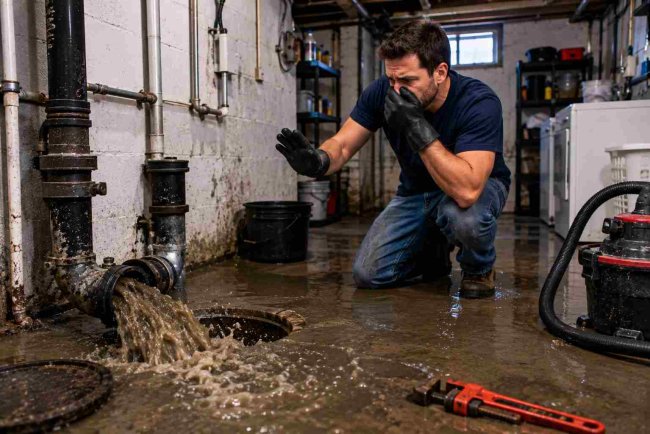
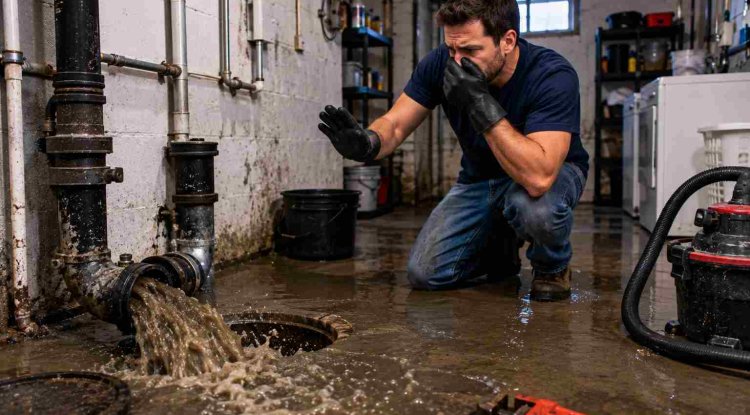
A main sewer line blockage occurs when the primary drainage conduit exiting a building becomes obstructed, causing wastewater from every fixture in the house to back up into the lowest available openings, such as basement floor drains, shower pans, and lowest-level toilets. When a system reaches this failure mode, hydraulic pressure gradients force waste backwards through branch lines because gravity drainage is completely interrupted by an accumulation of structural damage, foreign objects, heavy grease accumulation, or structural pipe collapse. This constitutes a whole-house drainage failure, differentiating itself clearly from localized fixture clogs that affect only a single sink, tub, or toilet.
The mechanical failure mode typically starts with restricted cross-sectional area inside the building drain or lateral sewer pipe. As solids, toilet paper, and greywater travel down the vertical soil stacks and horizontal branches, they catch on internal pipe imperfections, root intrusions, or offset pipe joints. Over time, this debris compounds into a dense plug. In older Baltimore properties, this is frequently compounded by bell-and-spigot cast iron pipe scaling or clay tile lateral cracking where shifting soil and mature street trees create chronic points of vulnerability. When the cross-sectional flow is reduced below the volumetric discharge rate of active fixtures, water begins to pool, creating an airlock and rising water columns in basement floor drains.
Overlooked Trade Secrets & Hidden Diagnostic Clues
Diagnosing a failing sewer lateral requires looking past the immediate symptom of a wet basement floor. Common DIY mistakes often misidentify the scope of the problem because water rarely emerges directly beneath the point of a hidden break due to lateral surface tracking along sub-floor materials, floor joists, and vintage plaster lath. When analyzing a slow-draining system, consider these critical diagnostic realities:
- Cables vs. Scouring: Clearing a drain line with a standard auger or cable merely pokes a temporary hole through a grease or root blockage. Unless the pipe wall is subsequently hydro-scoured or video-inspected, residual buildup immediately catches fresh debris.
- Vent Stack Interplay: A blocked or frozen roof vent stack mimics a physical main line clog by creating a severe vacuum lock, starving fixture traps of air and causing gurgling sounds or sluggish drainage across multiple rooms.
- Static vs. Dynamic Pressure: While water supply deals with PSI and GPM, drainage systems rely entirely on proper slope (typically 1/4 inch per foot) and venting. A slight sag or "belly" in an underground lateral eliminates this gradient, causing solids to drop out of suspension even if the pipe is clear of absolute blockages.
- Seasonal Ground Shifts: Freeze-thaw cycles in Maryland stress uninsulated crawlspaces and shallow exterior cleanout risers, frequently shearing older brittle clay tile or cast iron joints just outside the foundation wall.
Safe Homeowner Triage vs. Dangerous DIY Boundaries
Before professional intervention arrives, homeowners can execute specific safe triage steps while strictly avoiding high-risk procedures that risk personal injury or catastrophic property damage.
- Safe Step — Locate Cleanouts: Locate your interior main cleanout access plug and exterior yard cleanouts so you can inform service technicians of their exact positioning.
- Safe Step — Reduce Water Load: Immediately cease all indoor water usage—laundry washing, dishwasher cycles, and flushing toilets—to prevent additional graywater and blackwater from flooding living spaces.
- Danger — Opening Pressurized Plugs: Never attempt to unthread a main cleanout plug if water is actively pooling behind it under liquid head pressure. Removing a plugged cap under pressure can release a massive geyser of raw sewage into the basement.
- Danger — Caustic Chemical Cleaners: Avoid dumping harsh chemical drain openers into slow drains if a total blockage is suspected. If the chemicals fail to clear the clog, they sit stagnant in the pipes, creating severe chemical burn hazards for anyone servicing the line and accelerating corrosion in vintage metal systems.
Baltimore Architectural & Infrastructure Realities
Baltimore's unique architectural landscape directly impacts sanitary drainage performance. Classic historic brick rowhouses throughout neighborhoods like Charles Village, Fells Point, and Federal Hill share tight party-wall utility chases and interconnected lateral drain configurations. Many of these properties retain their original interior cast-iron stacks coupled to aging terra cotta or Orangeburg sewer laterals running beneath basement slabs to the municipal main in the alley or street.
Mixed-metal and mixed-material transitions are standard in these legacy homes, where decades of patch-work repairs have joined vintage lead, galvanized steel, and cast iron to modern PVC. Furthermore, Baltimore City's low-lying sub-grade basements are frequently vulnerable to municipal storm line surcharges during heavy Mid-Atlantic rain events. Without a properly functioning backwater valve, municipal water can reverse flow directly into residential basements, mingling with trapped household waste.
Repair Options & Transparent Cost Drivers
Addressing a compromised main sewer line ranges from targeted spot repairs to comprehensive modern trenchless lining. Understanding the factors influencing project scope helps contextualize professional repair estimates:
| Repair Approach | Best Applied When | Primary Cost Drivers |
|---|---|---|
| Mechanical Snaking / Hydro-Jetting | Routine root intrusion, grease buildup, or soft blockages without structural pipe collapse. | Line length, severity of scale/roots, accessibility of cleanouts. |
| Spot Section Excavation | Localized break, crushed pipe section, or severe structural offset in an accessible yard or basement. | Depth of burial, surface restoration (concrete breaking vs. landscaping), utility locates. |
| Trenchless Pipe Lining (CIPP) | Widespread deterioration, root infiltration throughout the lateral, or pipes running beneath finished hardscapes. | Pipe diameter, total linear footage, pre-lining cleaning and cutting requirements. |
Frequently Asked Questions
1. What are the earliest warning signs of a failing main sewer line?
Early indicators include multiple slow-draining fixtures simultaneously, gurgling sounds in the toilet bowl when a sink drains, and water bubbling up into the basement floor drain when the washing machine discharges.
2. How do tree roots manage to infiltrate underground sewer lines?
Tree roots seek out moisture and nutrients escaping from microscopic cracks, loose joints, or aging seals in clay tile and cast iron pipes, eventually expanding inside the conduit and blocking flow.
3. Can a camera inspection definitively pinpoint the exact location of a break?
Yes. Professional sewer cameras feature built-in radio transmitters (sondes) that allow technicians above ground to track the precise depth and horizontal location of the camera head using an electronic receiver.
4. Is it safe to use mechanical drain snakes myself on a main line?
Homeowner-grade handheld snakes lack the torque and reach required for main lines and can easily become permanently entangled or twisted inside root-filled cast iron pipes.
5. Why do my basement floor drains only backup when it rains heavily?
This typically points to a combined sewer system surcharge or municipal main overload where stormwater enters the sanitary lateral, or an exterior cleanout cap left missing or loose.
6. What distinguishes a local fixture clog from a main line blockage?
A fixture clog affects only one specific drain while other nearby fixtures drain normally. A main line blockage causes multiple unrelated fixtures throughout the home to drain poorly or back up completely.
7. Are chemical drain openers effective against root intrusions?
No. Chemical root killers may offer temporary suppression of fine root hairs, but they cannot remove structural root masses, grease buildup, or collapsed pipe sections.
8. How do Baltimore rowhouse configurations complicate sewer repairs?
Rowhouses often feature shared internal chases, tight property lines, and buried interior stacks beneath finished basement concrete slabs, limiting equipment access and requiring specialized compact machinery.
9. What is trenchless pipe lining and does it require excavation?
Trenchless CIPP (Cured-In-Place Pipe) inserts an epoxy-saturated resin liner through existing access points, inflating and curing it against the old pipe walls to create a seamless new pipe without digging up yards or driveways.
10. When should I call a professional emergency plumber immediately?
Call an emergency service provider immediately when raw sewage is actively backing up into living spaces, multiple bathrooms are completely out of service, or foul sulfur odors persist across the entire lower level.
What's Your Reaction?