Cast Iron Pipe Problems in Older Baltimore Homes Warning Signs
Learn the warning signs of failing cast iron pipes in older Baltimore homes, repair options, costs, timelines, risks, maintenance tips, and emergency signs.
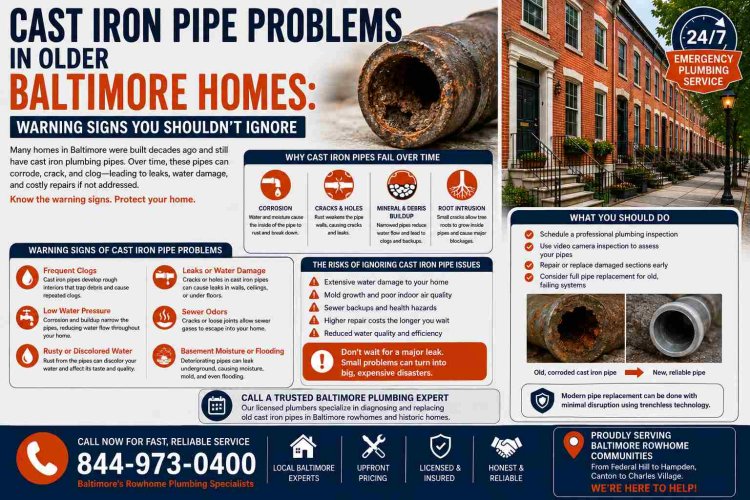
Older Baltimore homes have plenty of character, but aging plumbing systems can create problems that are easy to overlook until a pipe leaks, backs up, or fails completely. Cast iron drain and sewer pipes were commonly installed in older homes because they were strong, durable, and capable of lasting for decades.
The problem is that even cast iron eventually wears out.
If your Baltimore home was built several decades ago and still has its original plumbing, deteriorating cast iron pipes could be affecting your drains, sewer lines, or plumbing fixtures. Slow drainage, recurring clogs, foul odors, rusty water, and unexplained moisture around floors or walls can all be warning signs.
Understanding these symptoms early can help homeowners avoid extensive water damage and more expensive emergency repairs.
What Are Cast Iron Plumbing Pipes?
Cast iron pipes are heavy metal pipes that were widely used for residential drain, waste, and sewer systems. Unlike the smaller supply lines that bring clean water into a home, these pipes generally carry wastewater away from sinks, toilets, showers, tubs, and other fixtures.
Cast iron became popular because it is strong, relatively resistant to fire, and capable of handling wastewater for many years.
However, cast iron is not immune to corrosion. Over time, moisture, wastewater, soil conditions, pipe age, and repeated exposure to minerals can cause the inside and outside of the pipe to deteriorate.
In an older Baltimore home, a cast iron drainage system may still be functioning while already showing significant internal corrosion.
That is why waiting for a major leak or sewer backup is not always the best approach.
Why Do Cast Iron Pipes Fail in Older Baltimore Homes?
Age is one of the biggest factors.
As cast iron ages, corrosion can gradually reduce the thickness of the pipe. The interior surface can become rough and uneven, allowing grease, paper, hair, mineral deposits, and other debris to catch more easily.
Several other conditions can contribute to deterioration:
- Internal corrosion from wastewater
- External corrosion caused by moisture or soil
- Repeated clogs and backups
- Tree-root intrusion in underground sewer sections
- Shifting soil around buried pipes
- Poorly supported or sagging pipe sections
- Previous repairs that have reached the end of their useful life
- Cracks or fractures caused by structural deterioration
- Long-term exposure to moisture
The important point is that cast iron deterioration is usually gradual. A pipe can appear to work normally for years while its condition is quietly getting worse.
Warning Signs of Cast Iron Pipe Problems
Knowing what to look for can help you identify a developing problem before it becomes a plumbing emergency.
1. Frequently Slow Drains
A drain that occasionally runs slowly may simply have a localized blockage.
But when several drains throughout the house become slow, the problem may be farther down the drainage system.
For example, if the kitchen sink, bathtub, and basement drain are all draining more slowly than usual, an aging main drain or sewer line deserves professional attention.
2. Recurring Clogs
Repeatedly clearing the same drain is another warning sign.
If a plumber has already removed a blockage but the drain continues to clog, there may be deterioration, buildup, improper pipe slope, or another underlying issue.
Cast iron corrosion can create a rough interior surface that catches debris and makes recurring blockages more likely.
3. Sewage or Musty Odors
A persistent sewage smell inside your home should not be ignored.
It can indicate a damaged drain connection, failed seal, cracked pipe, sewer backup, or other drainage problem.
A musty smell around a basement, crawl space, or wall can also indicate hidden moisture.
Odors alone cannot confirm that cast iron pipes have failed, but they are a good reason to investigate.
4. Water or Damp Spots Around Floors and Walls
Unexpected moisture near plumbing fixtures may indicate a leaking pipe.
In older homes, a deteriorated cast iron drain can leak wastewater into surrounding areas. Underground leaks may be even harder to notice because water can enter soil beneath the house.
Watch for:
- Damp basement floors
- Wet spots around toilets
- Water stains
- Soft flooring
- Peeling paint
- Mold-like odors
- Unexplained moisture around pipe penetrations
5. Visible Rust or Corrosion
If exposed cast iron pipes are accessible in a basement, crawl space, or utility area, look for obvious signs of deterioration.
Surface rust does not automatically mean the pipe needs replacement. However, deep corrosion, flaking metal, holes, cracking, or severely deteriorated sections should be evaluated by a professional.
Do not scrape heavily corroded pipes aggressively. A pipe that is already structurally weak may be more fragile than it appears.
6. Toilet Problems and Sewer Backups
A toilet that repeatedly backs up, gurgles, or drains unusually slowly can sometimes indicate a larger drainage problem.
If multiple fixtures back up at the same time, the blockage may be located in a main drain or sewer line rather than inside one fixture.
A sewage backup should be treated seriously because contaminated wastewater can create sanitation and property-damage concerns.
Can Cast Iron Pipes Be Repaired Without Replacing Them?
Sometimes, yes.
The appropriate solution depends on the condition, location, and extent of the deterioration.
A plumber may recommend repairing a limited damaged section when the remaining pipe is structurally sound. In other situations, replacement may be more practical.
Modern diagnostic tools can help determine what is actually happening inside the pipe.
A sewer camera inspection, for example, can allow a plumber to examine the interior of a drain or sewer line and identify problems such as:
- Cracks
- Heavy corrosion
- Root intrusion
- Blockages
- Broken sections
- Pipe separation
- Deformed areas
- Significant buildup
This is much more useful than guessing based only on symptoms.
What Can You Do as a Temporary Fix?
If you have a minor drainage problem and there is no evidence of a major leak or sewage backup, you can take a few temporary precautions.
Avoid putting grease, cooking oil, coffee grounds, wipes, paper towels, or other unsuitable materials down drains.
Reduce water usage if multiple fixtures are draining slowly.
You can also avoid repeatedly using chemical drain cleaners. These products may temporarily clear certain blockages, but repeated use can create additional concerns, particularly in an already deteriorated plumbing system.
A temporary measure should not be considered a permanent solution when an older cast iron system is showing repeated symptoms.
If wastewater is backing up into your home, stop using affected fixtures and contact a professional plumber.
How Do Plumbers Diagnose Cast Iron Pipe Problems?
A professional inspection normally starts with the symptoms and plumbing history.
The plumber may ask:
- When did the problem begin?
- Which fixtures are affected?
- How often do backups occur?
- Has the drain been cleared before?
- Is there a sewage odor?
- Has the home had previous plumbing repairs?
- Is the plumbing original to the property?
The plumber may then inspect accessible piping and drainage points.
For underground or difficult-to-access lines, a sewer camera inspection may be recommended. This can provide a much clearer picture of the pipe's internal condition.
Depending on the problem, additional diagnostic methods may also be appropriate.
The goal is to identify the actual failure point before recommending a repair or replacement.
What Is the Professional Repair Process?
The repair process depends on what the inspection reveals.
Step 1: Identify the Problem
The plumber determines whether the issue is a simple blockage, localized pipe damage, widespread deterioration, or a main sewer problem.
Step 2: Inspect the Pipe
Where appropriate, camera inspection or other diagnostic methods can help determine the condition of the line.
Step 3: Choose the Appropriate Repair
Possible solutions may include clearing a blockage, repairing a damaged section, replacing deteriorated piping, or addressing a larger sewer-line problem.
Step 4: Access the Damaged Pipe
Some repairs require access through an exposed plumbing area, while buried piping may require excavation depending on its location and the selected repair method.
Step 5: Replace or Repair the Damaged Section
The plumber removes or repairs the compromised section and connects the new piping to the existing system using appropriate plumbing fittings and methods.
Step 6: Test the System
The repaired drainage system should be tested to verify proper flow and identify any remaining problems.
A reputable plumber should explain what was found, what work is recommended, and why that particular repair makes sense for the property.
How Long Does Cast Iron Pipe Repair Take?
There is no single timeline for every home.
A straightforward localized repair may take several hours, while a larger replacement project can take one or more days.
The timeline depends on:
- Pipe location
- Amount of deterioration
- Accessibility
- Length of pipe requiring replacement
- Whether excavation is necessary
- Existing plumbing configuration
- Permit or inspection requirements
- Whether unexpected damage is discovered
An emergency blockage may be addressed quickly to restore drainage, but permanent repairs can require additional planning.
Your plumber should provide a realistic timeline after inspecting the actual plumbing system.
How Much Does Cast Iron Pipe Repair Cost?
Cast iron plumbing costs vary significantly from one property to another, so homeowners should be cautious about relying on a single online price.
The final cost may depend on:
- The damaged pipe's location
- Amount of pipe requiring repair or replacement
- Accessibility
- Labor requirements
- Excavation
- Restoration of floors, walls, or landscaping
- Replacement materials
- Severity of corrosion
- Sewer-line access
- Required permits
- Emergency service timing
A small exposed-pipe repair can be very different from replacing a deteriorated underground sewer line.
The best way to receive an accurate estimate is to have the plumbing inspected and obtain a written explanation of the recommended work.
What Happens If You Ignore Deteriorating Cast Iron Pipes?
Ignoring a developing plumbing problem can turn a manageable repair into a much larger property issue.
A deteriorated drain pipe can eventually leak wastewater into areas that are difficult to access. A sewer-line problem can result in backups and contaminated water entering the home.
Potential consequences include:
- Repeated drain backups
- Sewage odors
- Water damage
- Damage to flooring and walls
- Moisture-related problems
- Structural concerns around prolonged leaks
- Emergency plumbing repairs
- More extensive pipe replacement
The exact risk depends on the condition and location of the pipe, but recurring symptoms should not be treated as normal simply because the home is old.
When Is Cast Iron Pipe Failure an Emergency?
Call for emergency plumbing service when wastewater is actively backing up into your home, a major drain line has failed, a pipe is releasing significant water, or you cannot safely use essential plumbing fixtures.
Other urgent situations include:
- Sewage entering living areas
- A rapidly worsening leak
- Multiple drains backing up simultaneously
- Water spreading through floors or walls
- A damaged pipe threatening electrical equipment
- Loss of essential drainage throughout the property
If safe to do so, stop using water until the plumber determines what is causing the problem.
People Also Ask About Cast Iron Pipes
How long do cast iron pipes last?
Cast iron pipes can last for many decades, but their actual service life varies according to installation conditions, water and soil exposure, maintenance, and pipe quality. Age alone does not determine whether replacement is necessary.
Should I replace cast iron pipes in an old Baltimore house?
Not necessarily. Replacement should generally be based on the pipe's actual condition, the frequency of problems, and the expected reliability of the existing system. An inspection can help determine whether repair or replacement makes more sense.
Can cast iron pipes be repaired?
Yes. Individual damaged sections may sometimes be repaired when the surrounding pipe remains structurally sound. Extensive deterioration may make replacement a better long-term option.
How do I know if my sewer line is failing?
Repeated backups, slow drainage throughout the property, sewage odors, unexplained wet areas, and recurring blockages can indicate a sewer-line problem. A professional inspection can determine the actual cause.
Voice Search Questions Homeowners Ask
“How do I know if my old cast iron pipes are bad?”
Look for recurring clogs, slow drains, sewage odors, visible corrosion, damp areas, leaks, and repeated backups. Multiple symptoms occurring together deserve professional inspection.
“Can old cast iron sewer pipes collapse?”
Yes. Severely deteriorated cast iron can crack, break, or collapse. The likelihood depends on the pipe's condition and surrounding environment.
“Is it safe to use drain cleaner in old cast iron pipes?”
Repeated chemical drain-cleaner use is not a good substitute for diagnosing recurring drainage problems. If an old plumbing system repeatedly clogs, professional inspection is usually a better approach.
“How can I prevent cast iron pipe problems?”
Avoid flushing unsuitable materials, keep grease and oils out of drains, address recurring clogs promptly, and consider professional inspection when an older plumbing system begins showing repeated warning signs.
How to Maintain Plumbing in an Older Baltimore Home
Older plumbing systems benefit from proactive maintenance.
Start by paying attention to changes rather than waiting for a complete failure.
Have recurring drainage problems investigated instead of repeatedly treating the symptoms. Keep grease, oils, wipes, paper towels, and other inappropriate materials out of the drainage system.
If accessible cast iron piping is visible in your basement or utility area, periodically look for obvious corrosion, leaks, or damaged sections.
Homeowners purchasing an older property may also benefit from having the plumbing and sewer system evaluated as part of their overall property inspection process.
Early information gives you more options than an emergency failure.
How to Choose the Right Baltimore Plumber
Cast iron problems can involve significant repair costs, so choosing a qualified plumbing professional matters.
Look for a plumber who:
- Clearly explains the cause of the problem
- Provides an inspection before recommending major work
- Explains repair and replacement options
- Gives a clear estimate
- Communicates expected timelines
- Has experience with older plumbing systems
- Can explain what is included in the proposed work
- Treats emergency situations promptly
- Follows applicable local plumbing requirements
Be cautious of anyone who recommends replacing an entire plumbing system without first explaining what was found and why replacement is necessary.
A good plumbing professional should help you understand the problem, not pressure you into a repair you do not understand.
Why Baltimore Homeowners Should Take Cast Iron Problems Seriously
Older homes can have plumbing systems that have performed reliably for generations. But reliable history does not mean the pipes will last forever.
Cast iron deterioration often develops gradually. A slow drain today could become a recurring backup later. A small leak could eventually damage surrounding materials. And a pipe that appears acceptable from the outside may have significant internal corrosion.
The earlier the problem is identified, the easier it can be to plan the appropriate repair.
For Baltimore homeowners and business owners experiencing recurring drain problems, sewage odors, leaks, or other warning signs, professional plumbing evaluation can provide a clearer answer than repeatedly treating the symptoms.
Get Help With Cast Iron Pipe Problems in Baltimore
If you suspect your older Baltimore property's cast iron pipes are deteriorating, Plumber in Baltimore can help you determine what is happening and what repair options may be appropriate.
Rather than guessing whether an old pipe needs replacement, have the problem evaluated so you can make an informed decision based on the condition of your plumbing.
For plumbing assistance in Baltimore, contact Plumber in Baltimore at 844-973-0400.
A timely inspection may help identify a developing problem before it turns into a costly plumbing emergency.
What's Your Reaction?