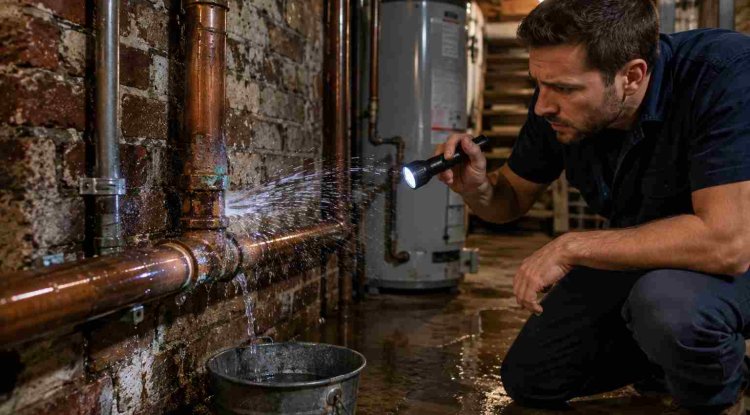
Diagnosing & Resolving Hydraulic Water Hammer in Plumbing
Learn how to diagnose and resolve hydraulic water hammer in your home's plumbing system. Prevent pipe damage and eliminate loud banging noises.

Understanding Hydraulic Water Hammer and Pipe Shock
Hydraulic water hammer occurs when a fast-moving column of water is forced to stop or change direction abruptly, generating a high-pressure shockwave that rattles pipes against framing and structural supports. This destructive phenomenon is driven by fluid momentum: when a quick-closing valve—such as a solenoid valve on a washing machine, an automatic dishwasher, or a fast-closing quarter-turn lever—shuts instantly, the kinetic energy of the moving water converts directly into a sudden pressure spike. This pressure surge can easily double or triple the static operating pressure of the municipal supply, creating the characteristic loud banging, shuddering, or vibrating sounds heard throughout a home's framing.
Establishing proper diagnostic boundaries is essential for effective mitigation. Water hammer is almost exclusively a supply-side pressure distribution issue, differing fundamentally from drainage or venting noise. It can manifest as a localized shock originating from a single high-demand fixture like an ice maker supply line or washing machine, or it can present as a systemic building supply tremor that reverberates through every connected branch line whenever any quick-closing valve operates.
The Mechanical Failure Mode of Air Chambers and Shock Arresters
In modern plumbing design, controlling this kinetic surge relies on sealed mechanical water hammer arresters containing a charged air or nitrogen cushion separated by a piston or bladder. In older properties, builders traditionally installed vertical standpipe air chambers—sealed vertical segments of pipe extending a foot or two above the fixture shutoff valve. Over time, these static air chambers fail because water continuously absorbs the trapped air pocket under pressure until the chamber becomes entirely waterlogged, rendering it useless for absorbing shockwaves. Once an air chamber waterlogs, metal-on-metal or metal-on-wood impacts occur unchecked every time a valve snaps shut.
Overlooked Trade Secrets & Hidden Diagnostic Clues
Pinpointing the exact origin of a water hammer noise requires a methodical approach that goes beyond simply listening to where the loud bang seems loudest:
- Acoustic Trickery: Sound travels exceptionally well through rigid metallic supply lines (such as copper or galvanized steel). A violent bang heard echoing inside a second-floor bathroom wall may actually originate from a poorly secured washing machine supply line in the basement or utility room.
- Static Pressure vs. Dynamic Flow: A system operating with high municipal static pressure (above 80 PSI) exponentially increases the velocity of moving water. High velocity magnifies the kinetic force of sudden valve closures, turning a minor pipe shudder into a destructive shockwave.
- Strap and Clamping Deficiencies: Pipes that lack sufficient structural isolation or slip past loose support straps will vibrate freely against floor joists, masonry, and plaster lath, amplifying a subtle pressure wave into a room-shaking acoustic event.
- Thermal Expansion Interaction: Closed-loop systems equipped with thermal expansion tanks can experience fluctuating baseline pressures if the tank's internal bladder fails, indirectly compounding the severity of hydraulic shock events.
Safe Homeowner Triage vs. Dangerous DIY Boundaries
Homeowners can safely perform initial diagnostic assessments without risking structural or system damage, provided they stay within clear operational boundaries.
Safe Homeowner Steps
- Systemic Isolation Test: Systematically turn on and off individual fixtures throughout the house to identify which specific appliance or valve triggers the acoustic shock.
- Main Pressure Verification: Attach a temporary pressure gauge to an outdoor hose bibb or laundry sink threaded adapter to check static system pressure during periods of low home water usage.
- Strap Inspection: Visually inspect accessible supply lines in unfinished basements, crawlspaces, and utility closets to check for unanchored pipes vibrating against framing members.
Dangerous DIY Boundaries
Never attempt to cut into pressurized supply lines or unthread rigid distribution fittings without first isolating the main water supply and completely depressurizing the system. Avoid using unapproved chemical quick-fixes or wrapping high-pressure lines with makeshift rubber patches or tape, as these methods cannot withstand hydraulic shock spikes and will lead to catastrophic blowouts.
| Diagnostic Indicator | Probable Mechanical Failure | Recommended Corrective Action |
|---|---|---|
| Single loud bang only when washing machine cycles | Waterlogged air chambers or missing arresters at laundry box | Install dedicated piston-type water hammer arresters directly at the valve inlets |
| Systemic shudder across multiple floors when any faucet closes | Failing municipal pressure reducing valve (PRV) or excessive static PSI | Test static pressure; replace malfunctioning PRV or install thermal expansion tank |
| Rattling noise in a specific wall cavity during tap closure | Unsecured copper or PEX lines rubbing against framing studs | Open access panel to secure pipes with insulated cushion clamps |
Baltimore Architectural & Infrastructure Realities
Properties in the Baltimore metropolitan area feature unique plumbing infrastructures that directly influence how hydraulic water hammer develops and how it must be resolved. Historic Baltimore brick rowhouses often feature tight, enclosed service chases where galvanized steel or aging copper supply lines run bundled closely together against masonry party walls. Because these vintage properties frequently lack modern mechanical shock arresters and rely on decades-old pipe runs, even minor shifts in municipal water pressure from aging city mains can induce severe pipe fatigue. Furthermore, municipal pressure fluctuations across different elevations in Baltimore City can push baseline static pressures past safe thresholds, making the installation of a dedicated pressure-reducing valve (PRV) an essential baseline upgrade for older rowhouse systems.
Repair Options and Transparent Cost Drivers
Addressing hydraulic shock ranges from simple retrofits to comprehensive system adjustments, with costs driven by accessibility and hardware requirements:
- Targeted Arrester Installation: Installing mini-arresters at high-impact fixtures (washing machines, dishwashers) requires minimal labor and parts, making it the most cost-effective intervention.
- Pressure Reducing Valve Replacement: Replacing a failed or missing main PRV restores controlled system pressure (ideally between 50 and 60 PSI), reducing kinetic energy across all fixtures simultaneously. Cost drivers include accessibility in tight basement utility corners and the need for pipe cutting and re-threading.
- Strap and Support Retrofitting: Securing hidden pipes inside finished walls or historic lath-and-plaster assemblies involves invasive drywall or plaster cutouts, increasing labor time and subsequent cosmetic repair requirements.
Frequently Asked Questions
1. What is the primary root cause of hydraulic water hammer?
Water hammer is caused by the sudden stoppage of moving water, which converts kinetic energy into a high-pressure shockwave that vibrates pipes against structural framing.
2. What are the early warning signs of developing water hammer?
Early signs include a single dull thud, mild pipe shuddering immediately after closing a faucet or appliance valve, or slight vibration felt in nearby walls.
3. What safe, non-invasive checks can a homeowner perform?
Homeowners can isolate which specific fixture triggers the noise, check visible supply lines for loose mounting brackets, and measure static water pressure using a hose-bibb gauge.
4. What common DIY mistakes worsen water hammer damage?
Attempting to fix banging pipes by overtightening fixture valves or wrapping lines with makeshift tape fails to address the underlying pressure surge and can weaken fittings.
5. Which plumbing materials are most vulnerable to water hammer stress?
Rigid older materials like rigid copper and brittle galvanized steel are prone to joint fatigue and joint separation under continuous hydraulic shock stress.
6. What are the primary labor and cost factors for professional repair?
Cost drivers include the accessibility of the affected pipe runs, whether drywall or plaster cutting is required, and whether main pressure-reducing valves must be replaced.
7. When is a repair preferable to a complete system repipe?
Spot repairs using mechanical arresters and PRV adjustments are sufficient when piping integrity is sound and the shock is isolated to specific high-demand appliances.
8. How do Baltimore's historic rowhouses complicate water hammer issues?
Tight service chases, mixed-metal piping transitions, and shared party walls concentrate acoustic vibrations, making localized pipe knocking echo throughout the entire structure.
9. What preventative maintenance routines reduce hydraulic shock risks?
Periodically testing static water pressure, inspecting basement pipe hangers, and monitoring washing machine supply lines help catch pressure surges early.
10. When is emergency professional intervention strictly required?
Professional intervention is required immediately if water hammer is accompanied by visible pipe joint leakage, structural wall cracking, or a sudden, uncontrollable spike in system pressure.
What's Your Reaction?