Low Water Pressure in Baltimore Rowhomes Common Causes

Learn the common causes of low water pressure in Baltimore rowhomes, simple fixes, repair costs, warning signs, and when to call a plumber.
Low Water Pressure in Baltimore Rowhomes Common Causes

Low water pressure is one of those plumbing problems that can start small and become extremely frustrating. A shower that used to have strong flow may suddenly feel weak. The kitchen faucet may take longer to fill a pot, or water may barely reach an upstairs bathroom when another fixture is running.

For Baltimore rowhome owners, the problem can be especially confusing because many older homes have aging plumbing components, long runs of piping, multiple floors, and plumbing systems that have been modified over the years.

The good news is that low water pressure does not always mean you need a major plumbing replacement. Sometimes the cause is as simple as a clogged faucet aerator or partially closed shutoff valve. In other cases, the problem can involve a failing pressure-regulating valve, a hidden leak, corroded pipes, or an issue with the incoming water service.

This guide explains the most common causes of low water pressure in Baltimore rowhomes, what you can safely check yourself, when professional diagnosis is needed, what repairs may involve, and when low pressure should be treated as an emergency.

What Is Considered Low Water Pressure?

Water pressure is commonly measured in pounds per square inch, or PSI. The U.S. Environmental Protection Agency's WaterSense guidance says residential fixtures generally perform best when incoming service pressure is around 45 to 60 PSI. A pressure much lower than that may indicate a plumbing or supply problem.

However, homeowners should distinguish between water pressure and water flow.

Pressure is the force pushing water through the plumbing system. Flow is the amount of water actually coming out of a fixture.

A faucet can have normal pressure at the supply line but poor flow because of:

  • A clogged aerator
  • Mineral or sediment buildup
  • Corroded piping
  • A partially closed valve
  • A damaged faucet cartridge
  • A restriction somewhere in the plumbing

That distinction is important because replacing a fixture will not solve a problem caused by the home's main water supply.

Why Are Baltimore Rowhomes Prone to Low Water Pressure?

Baltimore has many older rowhomes, and the plumbing inside an older property may have gone through decades of repairs, renovations, additions, and replacements.

A home may have a mixture of newer and older plumbing materials. Some properties may also have aging service lines or interior pipes with significant corrosion or mineral buildup.

Baltimore City also maintains information about residential water service lines because service-line material can vary and some properties still have unknown service-line materials.

This does not mean every Baltimore rowhome has a service-line problem. It simply means the age and history of the home's plumbing should be considered when diagnosing persistent pressure issues.

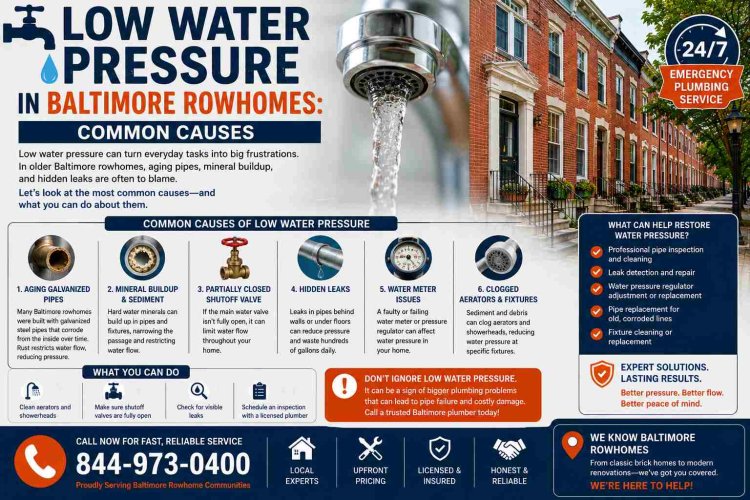
What Are the Most Common Causes of Low Water Pressure in Baltimore Rowhomes?

Several different problems can produce similar symptoms.

1. Partially Closed Main Shutoff Valve

The main water shutoff controls water entering the home. If it is not fully open, the entire house may experience reduced flow.

This can happen after:

  • Plumbing repairs
  • Water-main work
  • Home renovations
  • Emergency shutoffs
  • Previous plumbing work

Check that the main valve is fully open if you can safely access it.

Do not force an old, corroded valve. Trying to turn a deteriorated valve can cause it to leak or fail.

2. Clogged Faucet Aerators

If only one faucet has weak flow, the problem may be much simpler.

Small screens called aerators are installed at the ends of many faucets. Sediment, mineral deposits, or debris can accumulate inside them and restrict water flow.

A homeowner can often remove the aerator, clean it, and reinstall it.

If the faucet still has poor flow afterward, the restriction may be inside the faucet or supply line.

3. Clogged Showerhead

A showerhead can gradually accumulate mineral deposits and debris.

If the kitchen and bathroom faucets have normal flow but the shower suddenly becomes weak, inspect the showerhead before assuming there is a whole-house pressure problem.

Replacing or cleaning the showerhead may solve the issue.

4. Corroded or Restricted Pipes

Older plumbing can develop internal corrosion and buildup.

The outside of a pipe may look acceptable while the usable opening inside has become significantly smaller.

Think of it like a drinking straw. If the inside becomes restricted, less water can pass through even when the incoming pressure is adequate.

This is one reason older rowhomes can experience declining water flow over time.

5. Failing Pressure-Regulating Valve

Some properties have a pressure-regulating valve, commonly called a PRV or pressure regulator.

Its job is to control incoming water pressure.

A failing or improperly adjusted valve can cause:

  • Weak water pressure throughout the house
  • Fluctuating pressure
  • Pressure that changes when fixtures operate
  • Poor performance on upper floors

EPA guidance notes that PRVs may be used to maintain residential service pressure within an appropriate range.

A plumber can test the pressure before and after the valve to determine whether it is contributing to the problem.

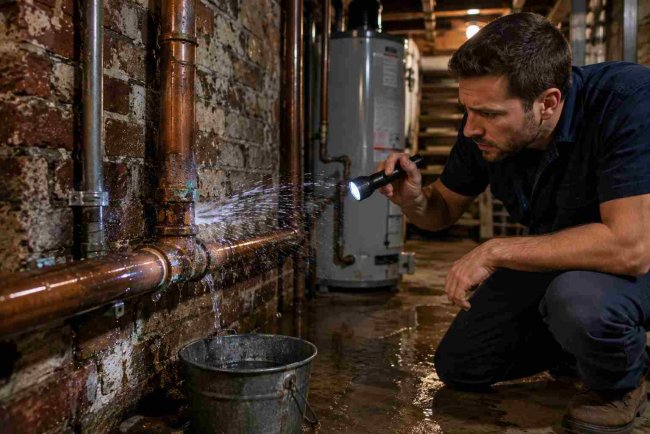
6. Hidden Plumbing Leak

A leak can reduce the amount of water available to fixtures.

Warning signs may include:

  • Unexplained increases in the water bill
  • Damp areas
  • Water stains
  • Musty smells
  • Sounds of running water when fixtures are off
  • Unexpectedly weak pressure
  • Wet basement areas

EPA WaterSense notes that household leaks can waste significant amounts of water and may result from aging pipes, corrosion, pressure problems, or malfunctioning plumbing components.

In a Baltimore rowhome, a hidden leak can sometimes be difficult to locate because pipes may run through walls, ceilings, floors, or basement areas.

7. Problem With the Incoming Water Service

If pressure is low throughout the property, the problem may be farther upstream.

Possible causes include:

  • A problem with the private service line
  • A damaged or restricted service pipe
  • Water-main work
  • A local supply-pressure issue
  • A valve problem

If nearby homes are experiencing the same problem, the issue may not be isolated to your plumbing.

8. Too Many Fixtures Running at Once

Sometimes the plumbing system is functioning normally but cannot provide the expected flow when several fixtures operate simultaneously.

For example, someone may be:

  • Showering upstairs
  • Running the washing machine
  • Filling the bathtub
  • Running a dishwasher
  • Using a kitchen faucet

At the same time, water demand increases and pressure at individual fixtures can fall.

A professional can determine whether the issue is normal demand-related pressure loss or a plumbing restriction.

What Are the Warning Signs of a Serious Pressure Problem?

Low pressure deserves closer attention when it is:

  • Present throughout the house
  • Getting progressively worse
  • Accompanied by unusual noises
  • Combined with visible leaks
  • Associated with water stains
  • Accompanied by a sudden rise in the water bill
  • Suddenly affecting multiple fixtures
  • Appearing after plumbing or water-main work
  • Severe enough that toilets, showers, or appliances cannot operate normally

A sudden, major change is generally more concerning than pressure that has been gradually declining for years.

What Can You Check Before Calling a Plumber?

There are several safe observations homeowners can make.

First, determine whether the problem affects one fixture or the entire house.

Then check whether the pressure changes when another fixture is turned on.

You can also inspect accessible faucet aerators and showerheads for visible debris.

If you have a water-pressure gauge designed for residential plumbing, EPA guidance indicates that pressure can be checked at an outdoor hose bibb with water-using fixtures turned off.

Avoid disassembling complicated valves, opening walls, or attempting repairs to old service lines without professional guidance.

Can Low Water Pressure Be Temporarily Fixed?

Sometimes.

Cleaning a clogged aerator or showerhead may restore normal flow if debris is the cause.

If a shutoff valve is obviously not fully open and operates normally, opening it completely may improve flow.

However, temporary improvements should not be confused with a permanent repair.

For example, if cleaning a faucet improves the flow but the shower, kitchen, and bathroom fixtures remain weak, the underlying issue is probably elsewhere.

Likewise, adjusting a pressure-regulating valve without testing the system can create another problem. Excessive water pressure can damage plumbing, fixtures, and appliances, while EPA guidance generally recommends residential service pressure around 45–60 PSI.

How Does a Professional Diagnose Low Water Pressure?

A professional plumber should begin with diagnosis rather than immediately recommending pipe replacement.

A typical inspection may include:

  1. Identifying which fixtures are affected.
  2. Testing static water pressure.
  3. Testing pressure while water is flowing.
  4. Inspecting accessible shutoff valves.
  5. Checking the pressure-regulating valve, if present.
  6. Looking for signs of leaks.
  7. Inspecting accessible piping.
  8. Checking fixtures for restrictions.
  9. Determining whether the issue is isolated to the property.
  10. Recommending repairs based on the actual cause.

The difference between static pressure and pressure while water is flowing can provide useful information. A system may show acceptable pressure when no water is being used but experience a significant drop when a fixture opens.

That can point toward a restriction, inadequate supply, valve problem, or other flow-related issue.

How Long Does Low Water Pressure Repair Take?

The timeline depends heavily on the cause.

A simple faucet aerator or showerhead restriction may take only minutes to address.

A valve adjustment or replacement can often be completed during a standard service visit if the component is accessible and replacement parts are available.

A hidden leak, severely corroded piping, or water-service problem can take considerably longer.

Typical situations may look like this:

Problem Possible Repair Time
Clogged aerator Minutes
Clogged showerhead Minutes to under an hour
Partially closed accessible valve Minutes
Pressure-regulator adjustment Often same visit
Pressure-regulator replacement Often several hours
Accessible pipe restriction Several hours depending on location
Hidden leak Several hours or longer
Major pipe replacement May require a larger project

These are general planning estimates, not guarantees. A plumber should inspect the actual property before promising a completion time.

How Much Does It Cost to Fix Low Water Pressure?

There is no single price for low water pressure because the symptom can come from many different plumbing problems.

The final cost can depend on:

  • Diagnostic time
  • Accessibility of the plumbing
  • Required parts
  • Valve replacement
  • Pipe material
  • Amount of pipe needing replacement
  • Whether walls or ceilings must be opened
  • Whether a leak is involved
  • Labor requirements
  • Permit requirements for applicable work
  • Emergency or after-hours service

Baltimore's building code includes licensing requirements for plumbing work, including requirements concerning licensed and insured master-plumber supervision.

A reputable plumber should explain the cause and recommended repair before significant work begins.

Be cautious of anyone who immediately recommends replacing the entire plumbing system without first testing pressure and identifying the actual restriction or failure.

What Happens If You Ignore Low Water Pressure?

Low pressure itself may be inconvenient, but the underlying cause can be more important.

If the problem comes from a hidden leak, ignoring it can allow water damage to continue.

If the issue comes from deteriorating pipes, the restriction may worsen over time.

If pressure problems are associated with a larger water-supply issue, the situation may require prompt investigation.

EPA resources also explain that pressure loss in drinking-water distribution systems can create conditions where contaminants may enter through cracks, breaks, or joints under certain circumstances.

That does not mean every low-pressure event makes household water unsafe. It does mean homeowners should take sudden or severe pressure loss seriously, particularly when it occurs with discoloration, service interruptions, or other water-quality concerns.

Does Low Water Pressure Mean My Baltimore Rowhome Needs New Pipes?

Not necessarily.

Pipe replacement should generally be based on evidence.

A plumber may recommend replacing sections of piping when there is significant corrosion, repeated leakage, severe internal restriction, or other documented deterioration.

In some older homes, replacing deteriorated plumbing can be the best long-term solution. In others, a relatively inexpensive valve or fixture repair may completely resolve the issue.

The right answer depends on the condition of the existing plumbing.

What About Baltimore's Older Water Service Lines?

Baltimore homeowners may encounter questions about the material of their water service line.

Baltimore City has been working with Baltimore County to identify service-line materials, including properties where material remains unknown. The city explains that Maryland banned installation of lead water service lines in 1972, while some older lines may still require identification.

If your pressure problem appears to involve the incoming service line, a qualified professional can help determine whether the issue is related to the property's private plumbing or the broader water supply.

Do not assume that low pressure automatically means a lead pipe or a service-line replacement is required.

People Also Ask About Low Water Pressure in Baltimore

Why is my water pressure suddenly low?

A sudden drop can result from a partially closed valve, leak, plumbing failure, water-main work, or a supply-pressure issue. If several fixtures become weak at the same time, investigate the problem rather than treating only one faucet.

Why is water pressure low upstairs but normal downstairs?

Upper floors can experience weaker flow when there is insufficient available pressure, a restriction, or significant pressure loss through the plumbing system. A plumber can test pressure at different locations to identify the cause.

Can a clogged pipe cause low water pressure?

Yes. Internal corrosion, mineral deposits, sediment, or debris can restrict the usable opening inside a pipe and reduce flow.

Is 40 PSI too low for a house?

Forty PSI may still allow fixtures to operate, but EPA WaterSense guidance identifies approximately 45–60 PSI as a preferred residential service-pressure range. Persistent pressure below that range deserves investigation.

Should I adjust my water pressure regulator myself?

It is generally better to have the system tested before making adjustments. Increasing pressure without knowing the system's condition can create excessive pressure and potentially damage plumbing components.

Voice Search: “Why Does My Baltimore Rowhome Have Low Water Pressure?”

If your entire Baltimore rowhome suddenly has weak water pressure, first determine whether nearby properties are experiencing the same problem. Then check accessible shutoff valves and individual fixtures. If the problem affects multiple fixtures or continues after basic checks, professional pressure testing can identify whether the cause is inside your plumbing system or related to the incoming supply.

When Is Low Water Pressure an Emergency?

Low pressure is more urgent when it occurs alongside:

  • A burst or rapidly leaking pipe
  • Water pouring from a ceiling or wall
  • A major basement leak
  • A sudden loss of water accompanied by visible plumbing damage
  • Sewage contamination or sewage backup
  • Significant flooding
  • A suspected underground service-line failure

If water is actively damaging the property, shut off the main water supply if it can be done safely and contact an emergency plumber.

Do not enter areas containing standing water near electrical equipment.

How Can Baltimore Homeowners Prevent Future Pressure Problems?

Routine plumbing maintenance can help identify problems before they become major repairs.

Consider:

  • Checking accessible valves periodically
  • Watching for unexplained water-bill increases
  • Inspecting visible pipes for corrosion or leaks
  • Cleaning faucet aerators
  • Cleaning or replacing clogged showerheads
  • Monitoring pressure if you have a residential pressure gauge
  • Addressing small leaks promptly
  • Having older plumbing professionally inspected
  • Knowing where your main water shutoff is located

If your property has an older plumbing system, periodic inspection can be particularly valuable.

How to Choose a Plumber for Low Water Pressure in Baltimore

Do not choose a plumber based solely on the lowest advertised price.

Look for a company that:

  • Serves Baltimore homeowners regularly
  • Can diagnose pressure problems rather than simply replace fixtures
  • Explains the cause in plain language
  • Provides a clear estimate before major work
  • Uses properly licensed professionals
  • Carries appropriate insurance
  • Understands older residential plumbing
  • Offers emergency service when needed
  • Stands behind its workmanship

Baltimore's plumbing requirements specifically address licensing and supervision for plumbing work, so homeowners should verify that the person performing regulated work is properly qualified.

When Should You Call a Baltimore Plumber?

If low water pressure affects only one faucet, start with simple fixture checks.

If pressure is weak throughout the house, continues to decline, changes dramatically when other fixtures operate, or is accompanied by leaks or unusual plumbing noises, professional diagnosis is a better choice.

For Baltimore rowhome owners, identifying the cause early can help prevent a minor restriction from becoming a larger plumbing problem.

Plumber in Baltimore can help homeowners investigate low water pressure, identify the underlying cause, and determine the appropriate repair instead of guessing at the solution.

For plumbing assistance in Baltimore, call 844-973-0400 or visit Plumber in Baltimore.

Final Takeaway

Low water pressure in a Baltimore rowhome can have many causes, from a clogged faucet aerator or partially closed valve to a failing pressure regulator, hidden leak, restricted piping, or incoming water-service problem.

The most important first step is determining whether the issue affects one fixture, one area of the home, or the entire property.

Do not automatically assume that an older Baltimore rowhome needs complete repiping. A professional pressure test and plumbing inspection can often narrow down the problem before expensive work is recommended.

When the pressure drops suddenly, is accompanied by leaking water, or becomes severe enough to affect the home's basic plumbing functions, prompt professional attention is the safest approach.

What's Your Reaction?

like

dislike

love

funny

angry

sad

wow