Diagnosing & Fixing Main Sewer Line Backups in Baltimore
Learn the mechanical causes, diagnostic signs, and safe triage methods for main sewer line backups in Baltimore historic and modern homes.

Understanding Main Sewer Line Backups
A main sewer line backup occurs when the primary drainage conduit carrying wastewater away from your home becomes obstructed, forcing sewage, gray water, and debris backward up through the lowest plumbing fixtures in the building. The primary mechanical failure mode involves a physical blockage—such as structural pipe collapse, grease accumulation, offset joints, or root intrusion—that overwhelms the cross-sectional hydraulic capacity of the pipe. When this main artery fails, incoming wastewater from upper-story fixtures like second-floor bathrooms or kitchen sinks has nowhere to go, seeking the path of least resistance and erupting out of basement floor drains, utility sinks, or low-lying shower pans.
Establishing clear diagnostic boundaries is essential for effective triage. A localized clog affects a single fixture, such as a bathtub draining slowly due to hair accumulation in the trap. Conversely, a main line obstruction impacts multiple fixtures simultaneously across different plumbing branches. If flushing a toilet causes water to bubble up in your shower drain, or running the washing machine causes wastewater to back up into the basement floor drain, the point of failure resides in the main building drain or lateral sewer line rather than a branch line.
Overlooked Trade Secrets & Hidden Diagnostic Clues
Common DIY troubleshooting often misses subtle indicators that reveal the true nature of a main sewer failure. For instance, water appearing in a basement far from the actual break is frequently caused by lateral surface tension tracking along floor joists, subflooring, or plaster lath. When a pressurized or severely restricted line leaks beneath a concrete slab, the moisture travels along the path of least resistance, surfacing feet away from the actual structural compromise.
Another frequent oversight involves mechanical drain cabling. Clearing a main sewer line with a standard rotating cable or snake only temporarily relieves standing water if organic grease accumulation or heavy root intrusion is not completely scoured from the pipe interior. Without a secondary hydro-jetting or descaling process, residual debris acts as a nucleation site, rapidly trapping new solids and causing a recurring backup within weeks.
Vent pipe blockages often mimic physical drain clogs by creating airlocks and severe negative pressure differentials. If roof vent stacks are plugged with leaves, animal nests, or ice accumulation, draining fixtures will create a vacuum that pulls water out of adjacent fixture traps, leading to gurgling sounds, slow drainage, and sewer gas odors that resemble a main line clog. Furthermore, seasonal freeze-thaw cycles in Maryland stress uninsulated crawlspaces, exterior sewer overhangs, and foundation penetrations, causing shifting soils that sheer vintage clay or cast-iron lateral connections.
Safe Homeowner Triage vs. Dangerous DIY Boundaries
When a main sewer backup occurs, knowing how to safely intervene can prevent catastrophic property damage, while avoiding high-risk steps protects personal safety.
Safe Homeowner Steps
- Cease Water Usage: Immediately halt all water-producing activities inside the home—including running dishwashers, doing laundry, flushing toilets, and taking showers—to prevent further sewage overflow.
- Locate the Main Cleanout: Identify the indoor access cleanout plug, typically located in the lowest level of the home, such as a utility room, crawlspace, or basement floor.
- Monitor the Water Meter: Check the low-flow indicator triangle on your water meter to rule out continuous pressurized supply leaks versus drainage issues.
Explicit Safety Warnings
- Never Unthread Main Cleanout Plugs Under Head Pressure: Attempting to unscrew a main cleanout plug while wastewater is backed up in the system can result in a high-pressure geyser of raw sewage and biohazardous waste.
- Avoid Caustic Chemical Drain Openers: Pouring harsh chemical drain cleaners into a blocked system containing standing water is ineffective and hazardous. The chemicals can pool in the pipes, splash back during unblocking attempts, and degrade aging cast-iron or PVC materials.
- Electrical Hazards: Never step into standing basement water near electrical panels, water heaters, or appliance outlets without shutting off the main electrical breaker.
Baltimore Architectural & Infrastructure Realities
Baltimore's unique architectural landscape presents distinct plumbing challenges. Classic Baltimore brick rowhouses feature shared party-wall plumbing networks and extremely tight service chases, meaning a main sewer line issue in one unit can impact structural connections shared with adjoining properties. Furthermore, historic rowhouses and older suburban homes frequently transition through mixed-metal and vintage materials: lead service in-lines, galvanized supply lines, vintage drum traps, bell-and-spigot cast iron, and modern PVC repairs.
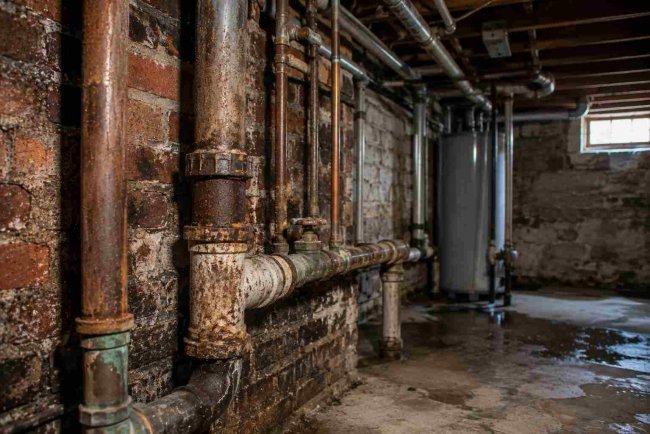
Aging bell-and-spigot cast-iron pipes, commonly found in Baltimore basements, degrade over decades as interior scale flakes off and creates rough internal surfaces that catch toilet paper and waste. Additionally, sub-grade daylight basements and older neighborhoods tied to municipal combined sewer systems are vulnerable to storm line surcharges during heavy Mid-Atlantic rain events. Without a properly functioning backwater valve, municipal stormwater can push backward through the lateral line and flood basements with mixed storm and sewer effluent.
Repair Options & Transparent Cost Drivers
Addressing a compromised main sewer line requires evaluating structural repair methods based on the pipe's condition and accessibility.
| Repair Method | Best Applied For | Operational Scope |
|---|---|---|
| Mechanical Snaking / Clearing | Temporary relief of acute clogs, hair, soft grease. | Cuts through blockage to restore immediate flow; does not fix structural defects. |
| Hydro-Jetting | Heavy grease buildup, interior scale, extensive root intrusion. | High-pressure water scouring cleans pipe walls down to bare material. |
| Spot Section Replacement | Localized pipe collapse, offset joints, cracked sections. | Excavation of a specific area to replace a damaged pipe segment. |
| Trenchless Pipe Lining (CIPP) | Widespread internal corrosion, multiple cracks under finished floors. | Inserts an epoxy-saturated liner through existing pipe, curing in place without heavy excavation. |
Repair costs vary widely based on several distinct operational drivers. Diagnostic camera inspection time, access complexity (whether the pipe runs beneath a finished basement floor or an exterior concrete patio), municipal permit fees, and the depth of the burial trench directly dictate the labor and equipment required to complete a permanent, code-compliant repair.
Frequently Asked Questions
1. What is the root cause of a sudden main sewer line backup?
Primary root causes include structural pipe collapse, heavy tree root intrusion through compromised joints, accumulation of grease and non-flushable items, or a sagging pipe section known as a sewer belly.
2. What are the earliest warning symptoms before a complete sewer backup?
Early indicators include slow-draining lower-level fixtures, gurgling sounds in toilets when washing machines drain, minor sewer odors near floor drains, and water bubbling up in basement showers during heavy usage.
3. Are there safe non-invasive checks homeowners can perform?
Yes. You can isolate whether the issue is isolated to a single fixture or affects the entire home by testing multiple drains and locating the main cleanout access point without opening it.
4. What common mistakes worsen main sewer line damage?
Pouring chemical drain openers into standing water, forcing rigid metal snakes through deteriorated vintage cast-iron pipes, and continuing to run water-heavy appliances during an active backup.
5. How do I identify material failure indicators in older pipes?
Frequent recurring clogs, rust flakes or sludge in floor drains, and visible cracks or dampness around basement floor cleanouts typically indicate advanced material degradation.
6. What primary factors influence the cost and labor of sewer repairs?
Cost drivers include the depth of the pipe, accessibility through landscaping or concrete slabs, the extent of structural damage requiring excavation or lining, and local municipal permitting requirements.
7. When is a sewer line repair preferred over complete replacement?
Repair or trenchless lining is ideal when damage is localized to a short section or when overall pipe material is structurally sound but affected by minor root intrusion or cracking.
8. How do Baltimore's historic rowhouses complicate sewer diagnostics?
Tight service chases, shared party-wall drainage configurations, and aging bell-and-spigot cast-iron systems require specialized diagnostic cameras and careful maneuvering to avoid damaging adjacent historic infrastructure.
9. What preventative maintenance routines reduce sewer backup risks?
Scheduling routine hydro-jetting, avoiding the disposal of grease, oils, and flushable wipes, and installing a backwater valve to prevent municipal stormwater surcharges protect the system.
10. When is emergency professional intervention strictly required?
Professional intervention is mandatory when raw sewage actively overflows into living spaces, multiple main-level fixtures are completely blocked, or cleanout access points show signs of high-pressure leakage.
What's Your Reaction?